
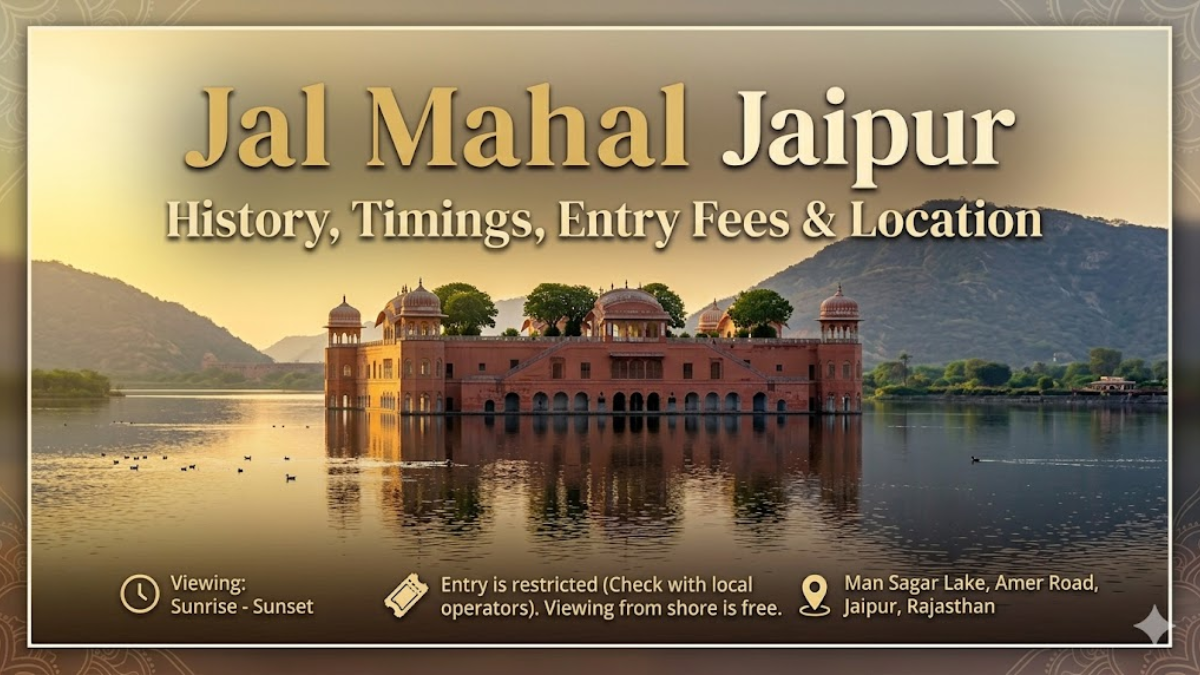
The Jal Mahal Jaipur, quite aptly known across the globe as the “Water Palace,” is a quintessential architectural wonder that appears to float magically on the tranquil waters of Man Sagar Lake. Set against the scenic backdrop of the ancient Aravalli hills, this symmetrical marvel is one of the most picturesque landmarks in India, offering a breathtaking visual treat—especially during the golden hours of sunrise and sunset.
Unlike traditional hill forts or bustling urban residences, Jal Mahal was built exclusively as a pleasure retreat and a secluded lodge to host royal duck-hunting parties.
Whether you are exploring the Pink City on a time-efficient Same Day Jaipur Tour Package or enjoying a detailed historical itinerary through a Jaipur City Tour Package, this ultimate guide outlines everything you need to know about this floating mirage.
Jal Mahal Tourist Information Hub
Planning your stop along Amber Road is simple, as the palace is observed from a beautiful lakeside promenade. Below is the verified directory for your visit:
| Parameter | Current Official Visitor Guidelines |
| Exact Location | Jal Mahal, Amber Road, Jaipur, Rajasthan – 302002, India |
| Opening Time | 6:00 AM (Ideal for catching the early morning mist over the lake) |
| Closing Time | 6:00 PM (The palace lights up beautifully shortly after sunset) |
| Entry Fee | Free (Foot travel inside the actual palace is currently restricted for conservation) |
| Time Required | 30 Minutes (Perfect for a photography and birdwatching stop) |
| Photography Restrictions | No Restrictions from the lakeside promenade |
| Available Facilities | Wheelchair access for senior citizens, clean public washrooms, paved pathways |
Historical Background: The Royal Hunting Lodge
The fascinating history of Jal Mahal dates back to the early 18th century. Built around 1750 by Maharaja Madho Singh I, the palace was never intended to serve as a full-time residential palace. Instead, it was conceived as an elegant, water-bound resort where the Maharajas of Jaipur could escape the responsibilities of the court, find absolute quiet, and indulge in recreational excursions.
Years later, Maharaja Madho Singh II initiated extensive renovation work on the structure, enhancing its strength, refining its terraces, and cementing its status as a worldwide symbol of Jaipur’s royal heritage and engineering innovation.
The Submerged Architectural Marvel & Unique Design
Jal Mahal represents a brilliant structural marriage, seamlessly blending the bold features of traditional Rajput architecture with the elegant, balanced symmetry of Mughal design. The red sandstone facade, domed corner pavilions (chhatris), and intricate carvings are classic Rajputana elements, while the layout reflects strict Mughal precision.
The Underwater Engineering Secret
The most incredible design feature of Jal Mahal is its hidden structural depth. While it looks like a single-storey building from the lakeside, the palace actually has five levels.
When the monsoon arrives and fills Man Sagar Lake, four of its five storeys become completely submerged underwater. Only the top level remains visible above the water line, transforming the massive stone structure into a floating mirage.
The lower underwater walls are built using a specialized, highly durable lime mortar system that prevents water leakage, showcasing the brilliant engineering skills of historic Rajasthani artisans.
Key Highlights to Experience at Man Sagar Lake
Though visitors do not take boats directly to the palace doors today, the lakeside promenade provides a fantastic travel experience filled with unique highlights:
1. The Floating Illusion
The silent waters of Man Sagar Lake create a perfect mirror surface. In the early mornings and late evenings, the clean reflection of the red sandstone palace against the water creates an otherworldly, magical atmosphere that makes it a top spot for travel photographers.
2. Chameli Bagh (The Rooftop Garden)
On the exposed fifth level of the palace sits the Chameli Bagh, a beautiful rooftop courtyard garden. Featuring arched walkways, carved pillars, and blooming pathways, this terrace garden adds a vibrant stripe of green that contrasts beautifully against the red sandstone and blue water.
3. A Birdwatcher’s Haven
The surrounding wetland habitat of the lake attracts a wide variety of local and migratory birds. Visitors can frequently spot flamingos, elegant herons, and various waterfowl, adding a lively, natural charm to the historic atmosphere.
Prime Attractions to Visit Around Jal Mahal
Jal Mahal is conveniently located along the main highway connecting the old walled city to the historic fortress of Amer. This makes it incredibly easy to pair with other nearby landmarks:
Amber Fort: One of the finest monuments in India. This powerful fort-complex is globally renowned for its sprawling courtyards, grand elephant pathways, and the stunning mirror-work inside the Sheesh Mahal.
Jaigarh Fort: Perched high on the rugged cliffs directly above Amber Fort, famous for holding Jaivana—the world’s largest historic cannon on wheels—and offering sweeping panoramic views.
Kanak Vrindavan Gardens: A beautifully landscaped, green valley garden located right at the foothills of Nahargarh, featuring pristine fountains and peaceful resting spots.
City Palace & Hawa Mahal: Located just a short drive back into the heart of the city, these structural wonders showcase the grand lifestyle, textiles, and thousands of iconic windows of the Kachwaha dynasty.
Best Time to Plan Your Lakeside Visit
The ideal season to experience Jal Mahal is during the cooler autumn and winter months, from October to March. To get the best experience, avoid the harsh glare of peak noon hours; instead, plan your stop during the early morning or late afternoon to enjoy dramatic lighting, peaceful breezes, and clear views of the Aravalli hills.
Frequently Asked Questions About Jal Mahal
Why is entry inside the Jal Mahal palace restricted?
The lower storeys are submerged, and the monument is protected under strict government heritage conservation guidelines to preserve its ancient wooden doors, lime plaster work, and structure.
Is boating available for tourists to go to Jal Mahal?
No, public boat rides to the palace are currently prohibited to protect the local bird population and preserve the monument’s structural security.
How many floors of Jal Mahal are actually underwater?
The palace has five storeys in total. When the lake is full, the bottom four storeys are completely submerged, leaving only the top floor visible.
Do we need to purchase a ticket to view Jal Mahal?
No, viewing the palace, taking photos, and walking along the paved lakeside promenade is completely free for all domestic and international tourists.
How long should I plan to spend at the Jal Mahal viewpoint?
A stop of 30 to 45 minutes is usually perfect to enjoy the panoramic views, take landscape photos, and observe the migratory birds.

Comment (0)