
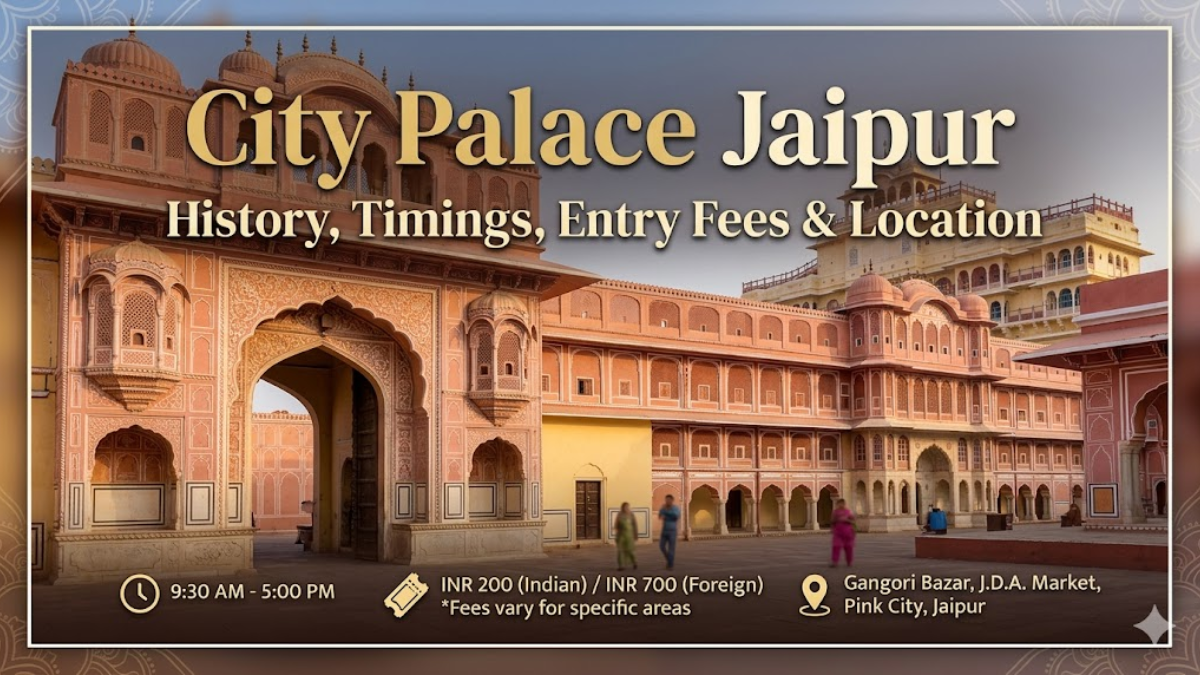
The City Palace of Jaipur is not just a monument; it is the living heart of the Pink City. While other fortresses across Rajasthan sit perched on isolated hilltops, City Palace stands proudly in the absolute center of Jaipur’s old walled city, acting as a profound symbol of the royal heritage, political power, and structural brilliance of the Kachwaha Rajput clan.
The complex represents a flawless artistic marriage where the structural bold lines of traditional Rajput masonry, the intricate floral symmetry of Mughal architecture, and the stately arches of European design blend into a harmonious whole.
Whether you are exploring the city on a quick, curated Jaipur One Day Tour Package or planning a deep dive into the state’s royal legacy, this comprehensive guide outlines everything you need to know.
City Palace Tourist Information Hub
Planning a hassle-free visit requires exact operational metrics. Below is the verified directory for ticket pricing, timing slots, and essential visitor parameters.
| Parameter | Current Official Visitor Guidelines |
| Exact Location | Jaleb Chowk, near Jantar Mantar, Tripolia Bazar, Kanwar Nagar, Jaipur, Rajasthan – 302002 |
| Day Visit Timings | 9:30 AM to 5:00 PM (Ticket counter closes at 4:30 PM) |
| Night Visit Timings | 7:00 PM to 10:00 PM (Experience the palace completely illuminated) |
| Indian Entry Fees | Adult: INR 130 | Children (5-12 Years): INR 70 | Senior Citizens: INR 110 |
| Foreigner Entry Fees | INR 500 (Includes entry to core courtyards and museums) |
| Media Allowances | Still Photography: INR 50 | Videography: INR 150 |
| Audio Guide Devices | INR 200 (Available in English, French, German, and Hindi) |
| Required Time | 2.5 to 3 Hours minimum to cover all major galleries |
Critical Entry Tip: Wheelchair facilities are readily available at the entrance to ensure easy access through the courtyards for senior citizens. However, note that photography is strictly prohibited inside specific private museum rooms and the upper residential floors.
Historical Background & Royal Origin
The City Palace was commissioned in 1727 by the visionary astronomer-king Maharaja Sawai Jai Singh II, the celebrated founder of Jaipur. Built to serve as the primary royal residence and the administrative headquarters of the Kachwaha dynasty, its construction marked a massive strategic shift.
Maharaja Sawai Jai Singh II realized that his ancestral seat at Amer Fort, cradled by the rugged Aravalli hills, could no longer support a growing population or expanding trade routes.
Physical construction began in 1729 with a highly planned, intricate layout that integrated traditional architectural principles with practical governance. Over the next two centuries, successive rulers expanded the palace grounds, adding new structures, manicured gardens, and hidden pavilions according to their personal tastes.
Today, it stands as a living example of how Rajasthani architecture grew over generations, integrating distinct design influences from different dynasties while preserving the heritage of the royal family.
Design, Layout & Architectural Wonder
The architectural footprint of City Palace is a spacious marvel where traditional styles blend in complete harmony. The sprawling layout transitions seamlessly between massive, wide-open ceremonial courtyards, quiet fountain squares, and highly protected residential quarters.
Every building inside the complex was meticulously designed for specific state or private purposes—serving the royal family, hosting administrative officials, or providing dedicated spaces for grand court ceremonies.
Built using native pink sandstone and pristine white marble, the architecture shows an incredible eye for detail. The structures feature extensive domes, detailed stone carvings, and beautiful frescoes that offer a striking contrast to the bustling urban jungle right outside the palace walls.
Major Attractions to See Inside the Palace
The unique features and rich symbolism built into the palace walls make it a dream destination for history admirers. When visiting via a comprehensive Jaipur City Tour Package, make sure to spend time exploring these core highlights:
1. Chandra Mahal (The Moon Palace)
The towering, multi-storeyed center of the complex. The exterior displays beautifully balanced cream balconies, while its inner rooms are adorned with priceless, excellently made frescoes and intricate mirror work. While the upper floors still serve as the private home of the royal descendants, the lower sections showcase rare historical artifacts.
2. Mubarak Mahal (The Welcome Palace)
This aristocratic, square monument showcases a magnificent blend of Islamic, Rajput, and European design. Built as a reception pavilion, it now houses a premium textile museum. The collection holds the historic royal clothes, heavy pashmina shawls, and embroidered materials that represent the rich artistic legacy of the Kachwaha clan.
3. The Royal Museum & Armory
Beyond the grand architecture, the palace museums store an unparalleled collection of old arms, hand-painted manuscripts, and historic courtly paintings. A unique feature of the inner courtyard is its famous decorative gates—especially the Peacock Gate. Adorned with vibrant, interlocking mosaic tile designs of peacocks, this gateway beautifully depicts the power, status, and artistic excellence of the royal family.
Historic Places to Explore Around City Palace
Because City Palace sits right at the geographical core of the old walled city, it is surrounded by several of Rajasthan’s most iconic landmarks, making it easy to cross multiple spots off your travel list:
Jantar Mantar: Located right next to the palace plaza, this popular astronomical observatory is a UNESCO World Heritage Site created to house deep, highly accurate scientific stone instruments.
Hawa Mahal: Popularly known as “The Palace of Winds,” located just a short walk away. It is universally famous for its breathtaking, honeycombed pink facade and its rich history associated with the royal ladies of the court.
Albert Hall Museum: Rajasthan’s oldest functioning museum, located a short drive away. It houses a very rich, diverse collection of international art, ancient models, and regional artifacts.
Nahargarh Fort: Perched high on the rugged hills, providing wonderful panoramic views of the entire urban landscape below and the perfect sunset viewing spot.
Johari Bazaar: The historic, world-famous marketplace surrounding the palace area, renowned for authentic jewelry, traditional tie-dye fabrics, and unique local handicrafts.
Best Time to Plan Your Journey
To comfortably explore the sprawling outdoor gardens and stone courtyards, the ideal time to visit is from October to March. The weather during these winter months stays pleasantly cool, making it perfect for taking photos, walking the historic premises, and shopping in the neighboring traditional bazaars.
Frequently Asked Questions About City Palace
Who built the City Palace in Jaipur and when?
The City Palace was commissioned by Maharaja Sawai Jai Singh II, the founder of Jaipur, in 1727. Core construction of the initial structures began in 1729.
Can we visit the City Palace at night?
Yes, City Palace offers a specialized Night Tourism experience from 7:00 PM to 10:00 PM, where the entire complex is beautifully lit up under floodlights.
Is the royal family still living inside the City Palace?
Yes, the descendants of Jaipur’s royal family still reside in the upper private storeys of the iconic Chandra Mahal, while the lower floors are open to the public as a museum.
What are the camera and photography charges inside the complex?
The standard fee for still photography is INR 50, and videography is INR 150. However, photography is strictly prohibited inside the private museum galleries and specific residential rooms.
How much time is required to tour the entire palace comfortably?
It typically takes about 2.5 to 3 hours to walk through the expansive courtyards, view the seasonal gates, and properly explore the textile and armory museums.

Comment (0)