
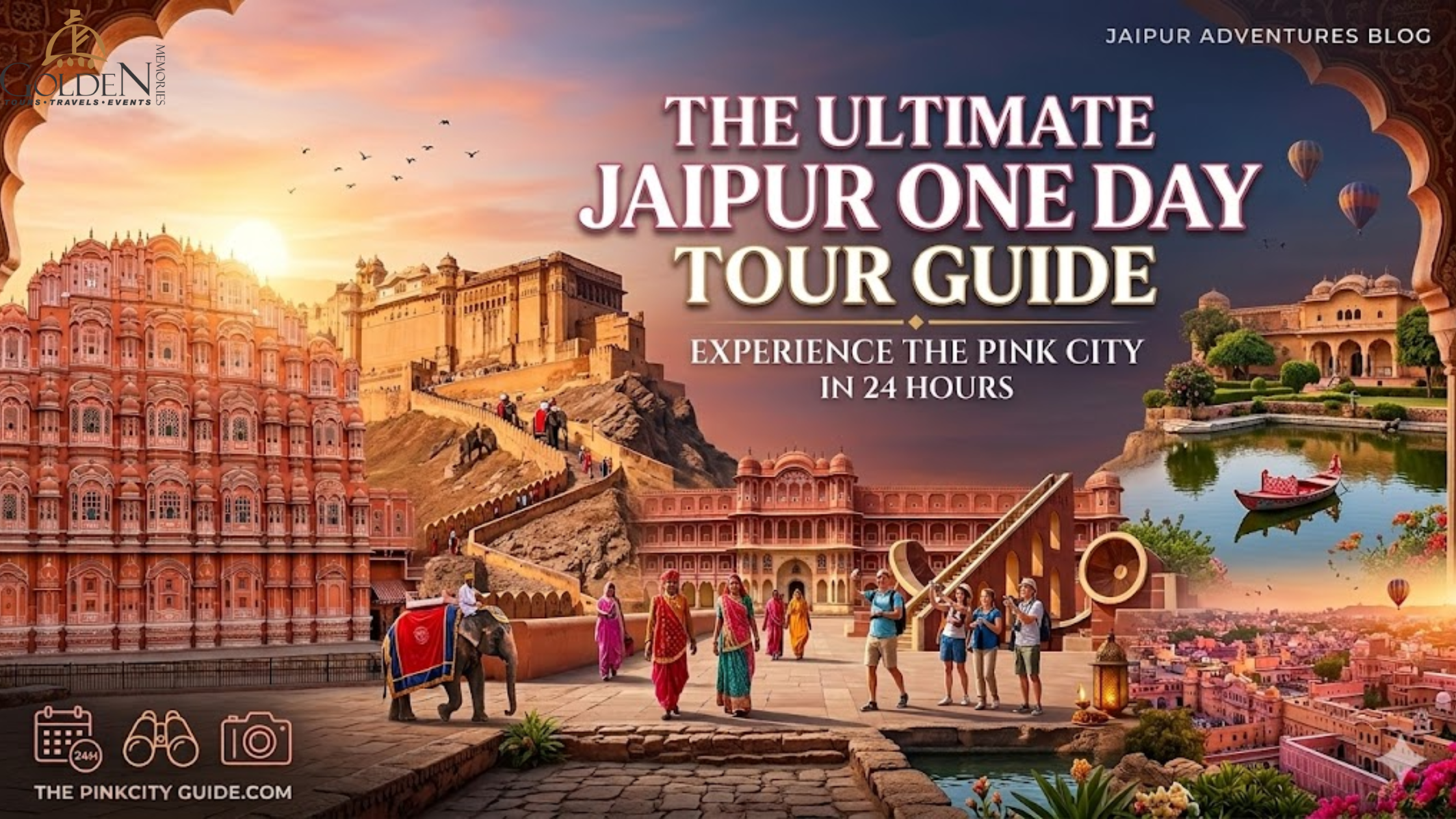
The Ultimate Jaipur One Day Tour Guide: Experience the Pink City in 24 Hours
Jaipur, the capital of Rajasthan, is a city where history breathes in every corner. From the massive fortifications of Amer to the delicate lattice-work of Hawa Mahal, the “Pink City” is a treasure trove for travelers. However, visiting Jaipur in a single day can be a daunting task if not planned correctly.
In this comprehensive guide, we bring you a step-by-step itinerary, insider tips, and practical information to make your journey an unforgettable royal experience.
Introduction: Why Jaipur in One Day?
Many travelers visit Jaipur as part of the “Golden Triangle” (Delhi-Agra-Jaipur). Often, due to tight schedules, they have only one day to explore. While Jaipur deserves a lifetime, its major historical and cultural landmarks are strategically located, making a one-day intensive tour highly effective.
A well-curated tour shouldn’t just be about “seeing” places, but about “feeling” the culture. A successful one-day plan focuses on efficiency without sacrificing the luxury and comfort that every traveler deserves.
Pre-Tour Essentials: Planning Your Visit
1. Best Time to Visit
Jaipur is located in a semi-arid region.
- Winter (October to March): This is the peak tourist season. The weather is pleasant (10°C to 25°C), making it ideal for sightseeing.
- Summer (April to June): It can get extremely hot (up to 45°C). If you travel during this time, AC-equipped private tours are a necessity.
- Monsoon (July to September): The city turns lush green, and the forts look stunning, though it can be humid.
2. Getting Around
For a one-day tour, we strongly advise against public transport or rickshaws for long distances. A private car is the most reliable way to cover all points from 8 AM to 8 PM comfortably, ensuring you don’t waste time looking for parking or waiting for cabs.
The Ultimate Jaipur One Day Itinerary
08:00 AM – The Grand Start: Hawa Mahal (Palace of Winds)
Kick off your morning at the most photographed building in Jaipur. Built in 1799 by Maharaja Sawai Pratap Singh, Hawa Mahal features 953 small windows called Jharokhas.
- Historical Context: It was designed to allow royal ladies to watch everyday life and festivals in the street below without being seen.
- Photography Tip: The morning light hits the pink sandstone perfectly. The cafes across the street offer the best panoramic shots for your social media.
09:30 AM – The Crown Jewel: Amer Fort (Amber Fort)
Located 11 km from the main city, Amer Fort is a UNESCO World Heritage site. It is a stunning blend of Hindu and Mughal architecture, built with red sandstone and marble.
- Highlights: The Sheesh Mahal (Mirror Palace) is the star attraction. It is said that even a single candle can illuminate the entire hall due to the intricate mirror work.
- The Experience: Explore the Diwan-e-Aam (Hall of Public Audience) and the beautifully carved Ganesh Pol. The fort’s location on the Aravalli hills provides a panoramic view of Maota Lake.
11:30 AM – The Symmetrical Wonder: Panna Meena Kund
Just a stone’s throw from Amer Fort is an 16th-century stepwell. While it once served as a community gathering spot and water reservoir, today it is famous for its criss-cross yellow stairs. It’s a hidden gem that offers a peaceful break from the bustling tourist crowds.
12:30 PM – The Floating Palace: Jal Mahal
On your way back to the city, stop at the edge of Man Sagar Lake. The Jal Mahal (Water Palace) appears to be floating in the center of the water.
- The Fact: Only one floor is visible above water, while four floors remain submerged. While entry inside is restricted, the lakeside walk is perfect for photography and enjoying the breeze.
01:30 PM – A Taste of Rajasthan: Lunch Break
A Jaipur tour is incomplete without authentic food. For the best experience, try a Rajasthani Thali.
- Menu: Look for Dal Baati Churma, Gatte ki Sabzi, and Ker Sangri.
- Local Tip: If you prefer spicy non-veg, Laal Maas is a legendary Rajput warrior dish you must try.
03:00 PM – The Royal Residence: City Palace
The City Palace is still the home of the royal family of Jaipur. A part of it is converted into a museum showcasing royal costumes, weapons, and chariots.
- Don’t Miss: The Pritam Niwas Chowk, which has four beautiful gates representing the four seasons. The Peacock Gate (representing Autumn) is particularly famous for its intricate design.
- The Silver Urns: See the world’s largest sterling silver vessels, recognized by the Guinness World Records.
04:30 PM – The Scientific Marvel: Jantar Mantar
Located right next to the City Palace, this is an astronomical observatory built in 1734. It features the world’s largest stone sundial. It’s fascinating to see how ancient Indians calculated time and predicted eclipses with pinpoint accuracy using only stone structures.
06:00 PM – Sunset & Shopping: Bapu Bazar & Johari Bazar
As the sun sets, the “Pink” in Pink City glows even brighter under the streetlights.
- What to buy: Look for Blue Pottery, Jaipuri Quilts (Razai), Gemstone Jewelry, and Bandhani (tie-dye) fabrics.
- The Vibe: Walking through these markets gives you the true local flavor of Jaipur, filled with vibrant colors and the smell of local street food like Pyaz Kachori.
Local Secrets for an Efficient Tour
- Composite Tickets: Instead of standing in line at every monument, buy a composite ticket at the first stop. It covers major sites and is valid for two days.
- Early Bird Advantage: Start at 8:00 AM. Most crowds arrive after 11:00 AM.
- Hydration: Rajasthan is dry. Keep a water bottle with you at all times.
- Authorized Guides: Always hire verified guides to ensure you get accurate historical information rather than myths.
How to Choose the Right Tour Operator?
When booking your trip, look for services that offer:
- Transparency: No hidden fuel or parking charges.
- Flexibility: The ability to skip a museum to spend more time at a market.
- Safety: Verified drivers who know the city routes perfectly.
For those looking for a seamless and premium experience, the Golden Memories offers specialized packages that cater to all these needs, ensuring your day is spent making memories rather than managing logistics.
Frequently Asked Questions (FAQs)
Q1: Is one day enough to see Jaipur?
While Jaipur has much to offer, a well-planned itinerary covers the top 5-6 major highlights like Amer Fort, Hawa Mahal, and City Palace comfortably within 12 hours.
Q2: What are the entry fees for Jaipur monuments?
Prices vary. Indians usually pay between ₹50-₹200 per site, while Foreigners pay between ₹200-₹700. A composite ticket is the most economical option.
Q3: Is Jaipur safe for solo travelers?
Yes, Jaipur is one of the most tourist-friendly cities in India. Using a private car service provides extra comfort and security for solo travelers.
Q4: What should I wear?
Wear breathable cotton clothes and comfortable walking shoes. You will be doing a lot of walking, especially at Amer Fort.
Q5: Can I customize my tour?
Most private operators allow customization. If you love history, spend more time at the museum; if you love photography, focus on the forts and stepwells.
Q6: Are the markets open on Sundays?
Most markets in Jaipur are open 7 days a week, though some small shops might remain closed on Sundays.
Q7: Can I get a pick-up from the airport?
Yes, most one-day tours offer airport or railway station pick-up to maximize your time in the city.
Final Thoughts
Jaipur is a city that stays with you long after you leave. The mix of Rajput bravery, Mughal aesthetics, and modern Rajasthani culture creates a unique atmosphere. Even if you only have one day, the Pink City promises a royal adventure that will leave you wanting more.

Comment (0)