
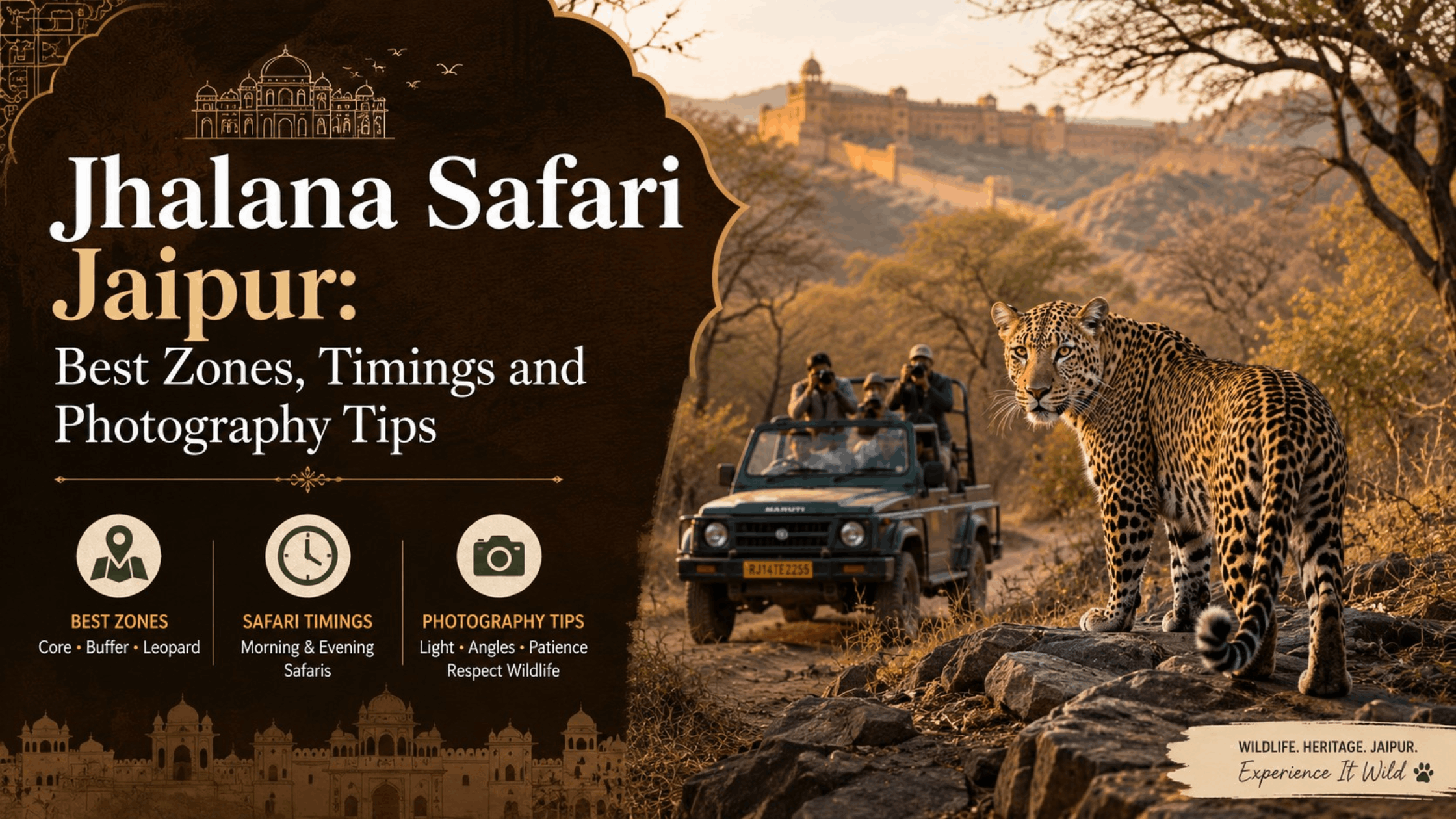
Jaipur is internationally known for its historic forts, royal palaces, colourful markets and traditional architecture. However, beyond the Pink City’s famous monuments lies an exciting wildlife destination where visitors can observe leopards in their natural habitat.
Located within easy reach of central Jaipur, Jhalana Safari offers a refreshing contrast to the city’s busy streets and heritage attractions. The landscape contains dry deciduous forest, rocky Aravalli hills, open scrubland, natural water points and safari tracks. Its compact terrain and relatively open vegetation provide good wildlife-viewing and photography opportunities.
The Golden Memories offers Jhalana safari experiences for travellers who want to combine wildlife with Jaipur sightseeing. The company describes its safari as a private or shared jeep experience lasting approximately two to two-and-a-half hours, with sunrise and sunset slots being particularly suitable for nature lovers and photographers.
Whether you are planning a dedicated Leopard Safari in Jaipur or adding it to a larger Jaipur Travel Package, this guide explains safari routes, seasonal timings, photography techniques, booking tips and suggested Jaipur itineraries.
Why Jhalana Safari Is a Special Jaipur Experience
Jhalana provides an unusual opportunity to experience wildlife without travelling several hours away from Jaipur. Its proximity to the city makes it convenient for families, couples, photographers, business travellers and tourists with limited time.
The official Rajasthan booking portal identifies Jhalana as India’s first dedicated leopard reserve and currently describes the reserve as supporting more than 40 leopards and several cubs. Wildlife numbers naturally change over time, so visitors should treat published population figures as current estimates rather than permanent counts.
The reserve’s open scrub, rocky slopes and exposed ridges can make wildlife easier to observe than in very dense forests. Nevertheless, every safari is different, and no operator, driver or guide can guarantee a leopard sighting.
Understanding Jhalana Safari Zones and Routes
Travellers frequently ask which is the best zone for Jhalana Safari. The answer is not as simple as choosing a numbered zone in a large national park.
Some current visitor and booking resources describe Jhalana’s tourism area as having two primary safari zones or routes. However, reporting based on forest-official information has also described three operational routes and the development of another track between the old Khan mining area and Neem Gatta. Officials stated that Jhalana does not always follow a rigid fixed-route system and that vehicles may explore available paths according to operating conditions.
Therefore, visitors should understand the following:
Zone or Route Allocation May Be Controlled by the Forest Department
Travellers may not always be able to select a specific route. Allocation can depend on permit availability, track conditions, forest-management decisions and the distribution of safari vehicles.
No Zone Guarantees a Leopard Sighting
Leopards move according to territorial behaviour, prey availability, temperature, water access and disturbance. A route that produced several sightings one morning may be quiet during the evening safari.
Recent Wildlife Movement Matters More Than the Zone Number
Experienced drivers and guides monitor alarm calls, pugmarks, recent movements and information from other authorised safari vehicles. Their knowledge can be more valuable than requesting a route based only on an online description.
Different Routes Offer Different Photography Opportunities
Rocky ridges may provide clear silhouettes, while scrubland tracks can offer eye-level sightings. Water points may attract deer, birds and other wildlife, particularly during hotter conditions.
Route Information Can Change
Jhalana’s internal safari-track network has been undergoing development. Confirm the currently operational routes through the Rajasthan Forest Department booking system or your tour coordinator before travelling.
For most visitors, the “best zone” is the route that has favourable recent wildlife movement, good track conditions and suitable morning or evening light.
Jhalana Safari Timings
Safaris usually operate twice daily: once in the early morning and once during the late afternoon or evening. Each safari generally lasts around two-and-a-half hours.
The Golden Memories’ 2026 safari calendar and current Jhalana booking references show the following seasonal pattern. Timings can be revised because of daylight, weather, track conditions or forest-department orders, so the time printed on your final permit should always be treated as authoritative.
| Period | Morning Safari | Evening Safari |
| 1 November–31 January | 7:00 AM–9:30 AM | 3:15 PM–5:45 PM |
| 1 February–31 March | 6:15 AM–8:45 AM | 3:45 PM–6:15 PM |
| 1 April–31 May | 5:45 AM–8:15 AM | 4:15 PM–6:45 PM |
| 1 June–31 July | 5:45 AM–8:15 AM | 4:45 PM–7:15 PM |
| 1 August–31 October | 6:45 AM–9:15 AM | 3:45 PM–6:15 PM |
Visitors should reach the reporting point at least 30 minutes before departure. Permit verification, identity checks, vehicle allocation and guide coordination can require additional time.
The Rajasthan Forest Department provides an official online permit system for Jhalana and Amagarh under its safari and zoo ticket-booking services. Availability should be checked there before finalising travel arrangements.
Wildlife Photography Tips for Jhalana Safari
Jhalana is suitable for both beginner and experienced wildlife photographers. The compact reserve, open terrain and safari duration make it easier to include photography within a normal Jaipur holiday.
1. Carry a Suitable Telephoto Lens
A lens in the 200–500 mm range is helpful for wildlife photography. A 70–300 mm lens can be sufficient for beginners, especially when animals appear close to the safari track.
2. Use a Fast Shutter Speed
Leopards can move suddenly, and safari vehicles may vibrate even when stationary. Use a shutter speed of approximately 1/1000 second for walking wildlife and increase it when photographing running animals or birds in flight.
3. Select Continuous Autofocus
Continuous autofocus helps maintain focus when an animal walks toward or across the vehicle. Use animal-eye detection when your camera provides reliable wildlife tracking.
4. Use Burst Mode Carefully
A short burst can help capture expressions, movement and eye contact. Avoid continuously holding the shutter because this fills memory cards quickly and creates unnecessary sorting work later.
5. Prepare for Changing Light
Morning and evening safaris involve rapidly changing light. Auto ISO with a sensible upper limit can help maintain a safe shutter speed.
6. Keep the Camera Ready
Wildlife sightings can happen suddenly. Keep the camera switched on, the lens cap removed and basic exposure settings prepared before entering the main safari tracks.
7. Use the Jeep as Support
A beanbag placed on the jeep railing can provide stability without the complexity of a tripod. Monopods may be useful but can become difficult to reposition inside a shared vehicle.
How to Book Jhalana Safari
Safari permits should be reserved in advance, particularly during weekends, holidays and the winter travel season.
Travellers generally need to provide:
- Full name
- Nationality
- Valid government identity document
- Travel date
- Preferred morning or evening slot
- Number of passengers
- Contact information
The same identity document used during booking should be carried for verification.
The Rajasthan Forest Department’s official permit page lists Jhalana/Amagarh Leopard Conservation Reserve among the available safari sites. The Golden Memories can assist travellers with safari coordination, transportation and combining the wildlife experience with other Jaipur attractions.
Why Choose The Golden Memories?
The Golden Memories offers Jaipur sightseeing, private transportation and wildlife experiences that can be customised for families, couples, photographers and small groups.
Its Jhalana tour information highlights:
- Approximately two to two-and-a-half hours of safari time
- Sunrise and sunset options
- Shared and private safari possibilities
- Wildlife and birdwatching opportunities
- Transportation coordination
- Combination with Jaipur attractions
The company also states that it coordinates with forest authorities for Jhalana bookings and helps travellers identify suitable photography viewpoints and complete Jaipur itineraries.
Travellers should confirm the final vehicle type, safari permit, pickup schedule, tour inclusions and cancellation policy before making payment.
Frequently Asked Questions
1. What is Jhalana Safari famous for?
Jhalana is famous for open-jeep safaris that provide opportunities to observe leopards, hyenas, nilgai, deer, jackals and numerous bird species within Jaipur’s urban region.
2. How long does a Jhalana Safari take?
The safari normally lasts approximately two to two-and-a-half hours, although reporting, permit verification and vehicle allocation require additional time.
3. Which is the best zone in Jhalana?
No route can guarantee a leopard sighting. Public resources commonly refer to primary zones or routes, while forest management may allow vehicles to use different available tracks. Recent animal movement and guide knowledge are more important than the zone number.
4. Is morning or evening better for Jhalana Safari?
Both are worthwhile. Morning provides cooler weather and active birdlife, while evening offers golden light and potentially increased wildlife movement as temperatures fall.
5. What are the Jhalana Safari timings?
The reserve operates morning and evening shifts that change seasonally. Indicative timings range from approximately 5:45–7:00 AM for morning departures and 3:15–4:45 PM for evening departures. Always follow the time printed on the final permit.
6. Are leopard sightings guaranteed?
No. Leopards are wild animals, and sightings depend on their natural movement, weather, habitat conditions and luck. Jhalana’s terrain may improve visibility, but no responsible operator can guarantee a sighting.
7. Is photography allowed during the safari?
Wildlife photography is generally part of the safari experience. Visitors should avoid flash, loud noises and actions that disturb animals. Current camera rules should be confirmed before arrival.
8. Can Jhalana Safari be included in a Jaipur one-day tour?
Yes. A morning or evening safari can be combined with selected attractions such as Hawa Mahal, City Palace, Jantar Mantar and Jal Mahal. Avoid including too many distant attractions in the same day.
9. Is Jhalana Safari suitable for families and couples?
Yes. Its location within Jaipur and relatively short safari duration make it suitable for families, couples and first-time wildlife visitors. Travellers with small children or mobility concerns should discuss their requirements before booking.
10. How can I book a Leopard Safari in Jaipur?
Permits can be checked through the Rajasthan Forest Department’s official safari-booking service. The Golden Memories can also coordinate permits, transfers and combined Jaipur sightseeing arrangements.

Comment (0)