
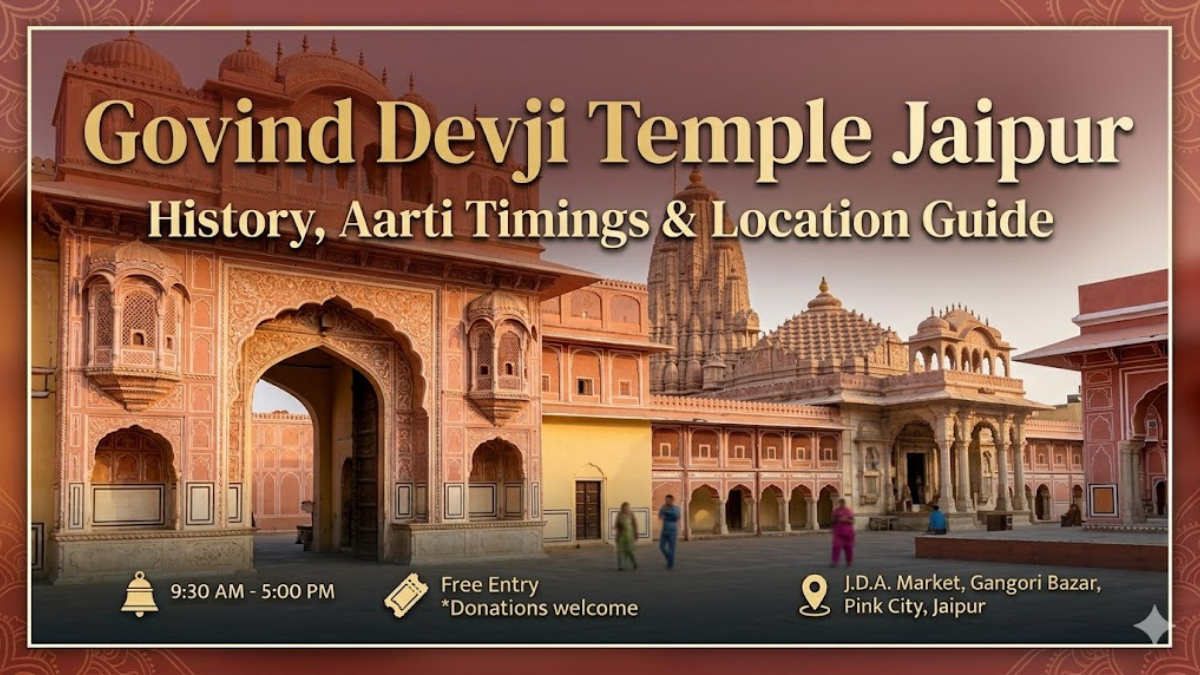
The Govind Devji Temple is the spiritual anchor of Jaipur and the guiding deity of its royal lineage. While structural marvels like Hawa Mahal or Amer Fort showcase the material grandeur of the Pink City, this sacred temple embodies its living heart and daily devotion. Located right within the expansive palace complex, the temple houses the historic idol of Lord Krishna (Govind Devji), brought to Rajasthan centuries ago to protect it from destruction.
The temple is unique not just for its deep faith, but also for its structural brilliance. It holds a renowned place in architectural history for featuring an incredibly wide, flat roof unsupported by a single central pillar, allowing thousands of devotees to catch a clear glimpse of the deity during prayers.
Whether you are navigating the historic old city using a swift Same Day Jaipur Tour Package or taking your time to immerse yourself in local culture via a multi-day Jaipur City Tour Package, experiencing the blissful energy of Govind Devji is a true spiritual highlight.
Govind Devji Temple Tourist Information Hub
Planning a visit requires aligning your day with the specific prayer times (Jhankis), as the inner temple curtains open only during these chosen slots.
| Parameter | Current Official Visitor Guidelines |
| Exact Location | Jaleb Chowk, inside the City Palace Complex, Kanwar Nagar, Jaipur, Rajasthan – 302002 |
| Temple Entry Fee | Free (No entry ticket is required for any devotee) |
| Daily Aarti Timings | Divided into 7 distinct Jhankis throughout the day (Times change slightly by season) |
| Time Required | 45 Minutes to 1 Hour (Depending on the specific Aarti crowd) |
| Photography Restrictions | Strictly prohibited inside the main prayer hall and towards the deity |
| Traditional Dress Code | Modest, respectful clothing is highly encouraged for all visitors |
| Available Facilities | Large shoe storage counters, clean drinking water, wheelchair friendly ramps |
Historical Background & Sacred Journey of the Idol
The historical background of the Govind Devji idol dates back well before the actual construction of Jaipur. According to sacred texts and regional history, this precise idol was sculpted by Vajranabh, the great-grandson of Lord Krishna, around 5,000 years ago. It is considered a Bajrakrit icon—meaning it perfectly mirrors the physical countenance of Lord Krishna during his earthly life in Vrindavan.
Idol Historic Journey Timeline:
[Sculpted in Vrindavan] ➔ Hidden during Mughor Era ➔ Rescued by Raja Man Singh I ➔ Safely installed in Jaipur (1727)
During the Mughal era, when ancient temples faced massive destruction across northern India, the priests of Vrindavan secretly smuggled the holy idol out of Uttar Pradesh. It was safely moved under tight security through the rugged hills of Rajasthan.
When Maharaja Sawai Jai Singh II founded the structured city of Jaipur in 1727, he brought the deity into his private royal gardens. He built this special temple complex right opposite his grand residential quarters at Chandra Mahal. He declared Lord Govind Devji as the true king of Jaipur, humbly positioning himself and the successive royal lineage as mere ministers (Dewans) ruling under the deity’s divine command.
The Architectural Wonder of the Assembly Hall
The architectural wonder of Govind Devji Temple beautifully reflects both the engineering skill and artistic sensibilities of the 18th-century Kachwaha court. Originally built as an elegant, open-walled pavilion or Suraj Mahal, the complex blends classic Rajasthani arches with clean, functional layouts.
The Pillarless Engineering Marvel
The most incredible, unique feature of the temple architecture is its massive, sprawling Satsang Hall. Designed to accommodate up to 5,000 devotees at once, this giant roof was engineered without a single central structural pillar to obstruct the view. This grand, column-free design allows every single visitor standing across the massive floor to have a perfect, direct line of sight to the beautifully carved inner altar during worship, highlighting the architectural innovations applied by the historic builders of Jaipur.
The 7 Daily Jhankis (Prayer Schedule)
Devotion at Govind Devji is centered around seven distinct viewing windows or Jhankis that symbolize the daily routine of Lord Krishna. The atmosphere during these sessions is highly charged with live classical singing, rolling drums, and rhythmic chanting:
Mangala: The early morning awakening session (Highly peaceful, starting around 4:30 AM to 5:00 AM).
Dhoop: The morning sun-worship prayer slot.
Shringar: The viewing of the deity beautifully adorned in royal robes and fresh floral garlands.
Rajbhog: The grand afternoon feast offering window, after which the temple curtains close for the afternoon rest.
Gwal: The late afternoon session represents the time the Lord returns from herding the cows.
Sandhya: The highly popular sunset evening prayer attracts thousands of local devotees.
Shayan: The final night closure prayer before the deity goes to rest.
Historic Landmarks to Visit Around the Temple
Because the temple sits neatly within the main imperial footprint of the old walled capital, you can easily group it with nearby heritage spots:
City Palace (1-min walk): The iconic royal residence housing spectacular text museums, ancient armories, and the majestic seasonal gateways of Pritam Niwas Chowk.
Jantar Mantar (3-min walk): The legendary astronomical stone observatory featuring massive scientific dials that accurately track time and constellations.
Hawa Mahal (5-min walk): The towering pink sandstone structure is designed with close to a thousand windows to let cool breezes pass through the royal viewing screens.
Tripolia Bazaar (2-min walk): The historic ironwork and fabric marketplace located right outside the main gates, famous for brassware, local spices, and traditional textiles.
Best Time to Plan Your Visit
While the temple is visited daily year-round by locals, the ideal time for travelers is between October and March when the daytime weather is pleasantly cool.
Additionally, visiting during the festival of Janmashtami (Lord Krishna’s birthday) or Holi offers an incredible look into local culture, as the entire temple area is transformed with thousands of lights, colorful decorations, and grand musical performances.
Frequently Asked Questions About Govind Devji Temple
Is there any ticket price to visit the Govind Devji Temple?
No, entry to the Govind Devji Temple is entirely free for everyone. There are no VIP paid ticket lines inside the main assembly hall.
Are the temple timings fixed throughout the year?
The exact timing of the 7 daily Jhankis shifts by 15 to 30 minutes between summer and winter seasons based on the tracking of the natural sunrise and sunset.
Is leather allowed inside the temple prayer hall?
Out of respect for local religious customs, visitors must leave all leather items, shoes, and footwear outside at the secure, free storage counters.
Can foreigners visit the Govind Devji Temple?
Yes, people of all nationalities and faiths are welcome to enter the temple complex and experience the peaceful evening prayers and classical music sessions.
Which is the most crowded time to visit the temple?
The Mangala (early morning) and Sandhya (sunset) Aartis attract the highest density of local worshippers, especially on Sundays and holy days.

Comment (0)