
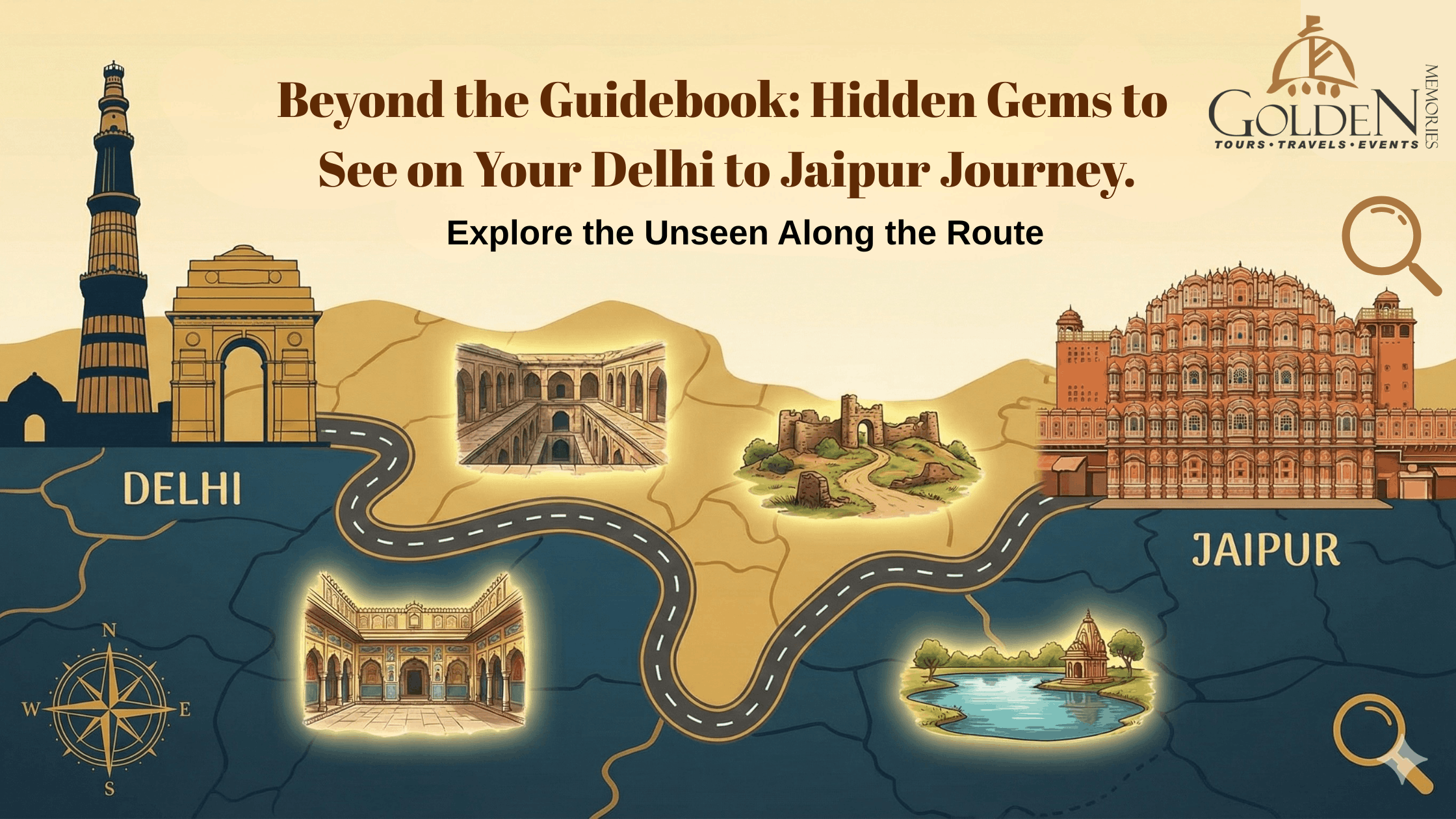
The 280-kilometer stretch of National Highway 48 (NH48) connecting Delhi to Jaipur is one of the most traveled corridors in India. Most travelers treat this route as a high-speed transfer, zipping past the Aravalli hills to reach the “Pink City” as quickly as possible. However, the true soul of Rajasthan lies in the detours.
By 2026, the travel landscape has shifted. With the new Delhi-Mumbai Expressway taking the bulk of commercial traffic, the traditional NH48 has become a scenic haven for slow travelers. If you are willing to steer off the main road, you will discover 15th-century stepwells, haunted ruins, and artisan villages that the guidebooks often overlook. This is your guide to the hidden gems on the road from Delhi to Jaipur.
The Heritage Stops: Forts Beyond the Famous
While everyone knows the Amber Fort, the route leading to it is dotted with smaller, equally magnificent fortifications that offer peace and exclusivity.
Neemrana’s Secret: The 9-Story Baori
While many stop at the famous Neemrana Fort Palace for lunch, few venture to the Neemrana Baori. Located just a kilometer from the fort, this massive nine-story underground stepwell is a marvel of 18th-century engineering.
- Why visit: Unlike the crowded stepwells in Jaipur, you’ll likely have this geometric masterpiece to yourself.
- Pro Tip: Visit during the “Golden Hour” (late afternoon) to see the sunlight play on the intricate stone carvings.
Bala Qila: The “Scotland of Rajasthan”
Alwar is often bypassed, but the Bala Qila (Alwar Fort) perched atop the Aravallis is worth the detour. It is a massive structure stretching 5 km from north to south.
- What to see: The Nikumbha Mahal Palace inside the fort features intricate marble pillars and latticed balconies that rival the grandeur of Jaipur’s City Palace.
The Spiritual & Historical Detours
History on this route stretches back further than the Rajputs, reaching into the era of Ashoka and the Mahabharata.
Viratnagar (Bairat): A Buddhist Legacy
Located about 90 km before Jaipur, Viratnagar is a “time capsule.” It contains remains of a Buddhist monastery dating back to the 3rd century BCE and an Ashokan rock edict.
- The Legend: Local lore says the Pandavas spent their year of exile (Agyatvas) here.
- The Sights: Visit the “Bijak-ki-Pahadi,” where the circular Buddhist temple ruins provide a panoramic view of the surrounding plains.
Khatu Shyam Ji: The Vibe of Devotion
A slight detour toward Sikar brings you to the Khatu Shyam Ji Temple. In 2026, this has become a major spiritual hub, but the experience remains deeply authentic.
- Experience: Even if you aren’t religious, the local market surrounding the temple offers some of the best traditional sweets and hand-dyed fabrics in the region.
Cultural Pockets: Artisans and Wildlife
The journey isn’t just about stone and mortar; it’s about the people and the land.
Bagru Village: The Block Print Capital
Just 30 km before entering Jaipur city limits, stop at Bagru. While Jaipur is famous for Sanganeri prints, Bagru is where the traditional “Dabu” (mud-resist) block printing lives.
- Hands-on Experience: Many workshops allow travelers to try their hand at block printing. It is a sensory experience of natural indigo dyes and wooden blocks.
Sultanpur Bird Sanctuary: The Quiet Start
If you leave Delhi at dawn, your first stop should be Sultanpur, just off the highway near Gurugram.
- Winter Special: Between November and February, this Ramsar site hosts over 250 species of migratory birds, including flamingos and Siberian cranes.
The Culinary Trail: Dhabas vs. Royalty
You cannot travel through Rajasthan without indulging in its legendary highway food.
- Old Rao Dhaba (Dharuhera): The quintessential stop for “Butter-Laden Parathas.” It is the busiest dhaba on the route for a reason.
- Just Desi (Kotputli): A village-themed restaurant that offers a more refined “Dal Baati Churma” experience in a garden setting.
- Tijara Fort-Palace: If you prefer luxury, detour to Tijara for a royal Rajasthani Thali in a restored 19th-century hill fort.
Delhi to Jaipur: Road Trip Essentials (2026)
| Metric | Details |
| Total Distance | ~280 km (Via NH48) |
| Travel Time | 5–6 hours (with 2 stops) |
| Best Route | NH48 for sightseeing; Delhi-Mumbai Expressway for speed. |
| Toll Estimates | ₹600 – ₹750 (Small car) |
| Best Season | October to March (Spring/Winter) |
Travel Tips for the NH48 Route
- FASTag is King: Ensure your wallet is topped up; manual toll lanes are almost non-existent in 2026.
- Speed Cameras: Be wary around Manesar and Kotputli; speed limits are strictly enforced with automated cameras.
- Hydration: Rajasthan’s sun is fierce even in winter. Carry reusable water bottles to minimize plastic waste.
- Cash is Still Handy: While major stops accept UPI/Cards, local artisans in Bagru or Viratnagar may prefer cash.
❓ Frequently Asked Questions (FAQ)
Q1: How long does it take to reach Jaipur from Delhi by road?
A: On the traditional NH48, it takes 5–6 hours. If you use the new Delhi-Mumbai Expressway, you can reach the outskirts of Jaipur in under 3.5 hours, but you will miss most of the heritage stops.
Q2: Is the road safe for night driving?
A: Yes, the highway is well-lit and busy. However, we recommend driving during the day to enjoy the views and to avoid heavy truck traffic that peaks after 10 PM.
Q3: Can I visit Bhangarh Fort on this route?
A: Yes, Bhangarh (the “Most Haunted Fort in India”) is a detour of about 45 minutes from the main highway near Alwar. Note that the fort closes strictly at sunset.
Q4: What is the best stop for a clean washroom and food?
A: Highway King (Behror) and Old Rao Dhaba (Dharuhera) are the most reliable stops for clean facilities and standardized food.
Q5: Is it worth visiting Sariska National Park on the way?
A: If you have an extra 4 hours, yes. Sariska is a great place to spot leopards and tigers, but it requires a detour and a pre-booked safari slot.
Q6: What should I buy on the highway?
A: Look for “Mawa Kachori” near the Alwar-Jaipur border and hand-block printed fabrics in Bagru village.
Q7: Is there any mobile connectivity issue on the route?
A: Generally, no. 5G is available throughout the NH48 stretch, though some deep valleys in the Aravallis might have temporary 4G drops.
Q8: Are there EV charging stations on the Delhi-Jaipur highway?
A: Yes, in 2026, there are fast-charging stations every 40–50 km, primarily located at major food courts like Highway King and Mannat Dhaba.
Disclaimer
Road conditions and entrance fees to monuments are subject to change. Some hidden gems like Viratnagar have limited facilities, so plan your fuel and food stops accordingly. All tours booked through our platform are covered by comprehensive travel insurance.
Conclusion
The road from Delhi to Jaipur is a corridor of history, waiting for someone to slow down and listen. Whether it’s the symmetry of a forgotten stepwell or the smell of natural indigo in a village workshop, these hidden gems provide the context that makes the “Pink City” even more special when you finally arrive.

Comment (0)