
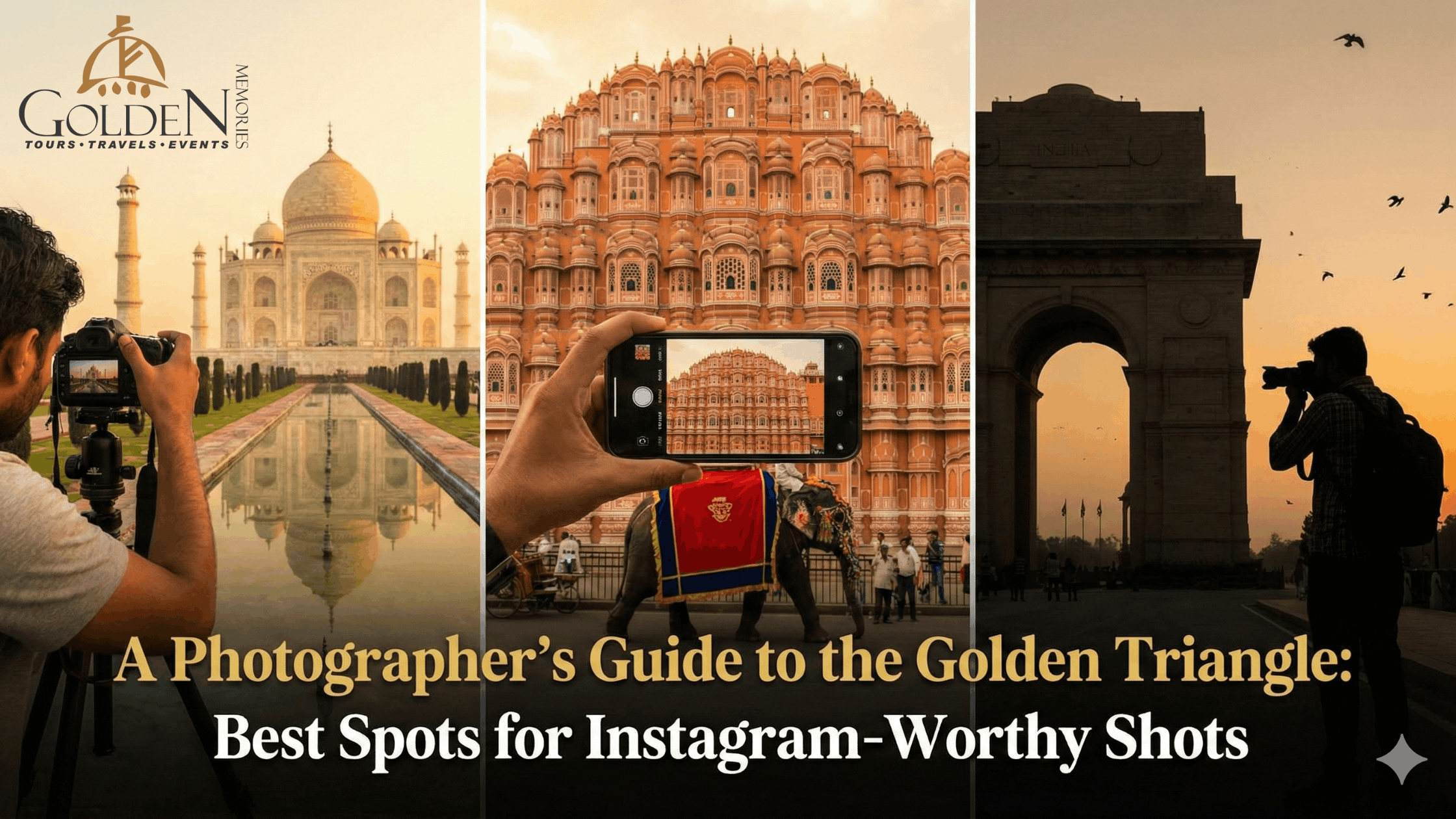
The “Golden Triangle”—comprising Delhi, Agra, and Jaipur—is more than just a tourist circuit; it is a visual symphony of Mughal grandeur, Rajput royalty, and chaotic street energy. In 2026, these cities have become the ultimate playground for content creators and photography enthusiasts seeking that perfect blend of ancient symmetry and vibrant colors.
Whether you’re shooting with a professional mirrorless setup or the latest smartphone, this guide highlights the most “Instagrammable” locations and the technical tips you need to capture them.
Delhi: The Contrast of Chaos and Calm
Delhi is a city of layers. To capture its essence, you must balance the manic energy of its streets with the silent majesty of its tombs.
Humayun’s Tomb (Mughal Symmetry)
The precursor to the Taj Mahal, this UNESCO site is a masterclass in Persian-inspired architecture.
- The Shot: Use the water channels (Charbagh) for a perfect reflection shot of the red sandstone tomb.
- Best Time: 7:00 AM. The soft morning light hits the white marble dome perfectly without the harsh glare.
- Pro Tip: Frame your subject within the arched gateways for a “photo-within-a-photo” effect.
Agrasen Ki Baoli (Stepwell Shadows)
Tucked away near Connaught Place, this 14th-century stepwell is an architectural marvel.
- The Shot: Shoot from the top looking down to capture the 108 steps and the symmetrical alcoves.
- Best Time: Mid-afternoon. This is one of the few places where high sun creates dramatic shadows in the deep recesses of the well.
Lodhi Art District (Street Style)
India’s first open-air public art district.
- The Shot: Huge, vibrant murals by global artists. Perfect for “street-style” portraits or outfit-of-the-day (OOTD) shots.
- Best Time: Late afternoon for the best color saturation.
Agra: Beyond the “Big White Building”
Agra is defined by the Taj Mahal, but the city offers unique vantage points that many travelers overlook.
The Taj Mahal (The Classic Sunrise)
- The Shot: The “Princess Diana Bench” is iconic, but for a unique angle, head to the Kau Ban Mosque (on the right of the Taj) and shoot the Taj through its arched doorway.
- Best Time: Arrival at 5:30 AM is mandatory. Be the first through the East Gate to get a “people-free” main platform shot.
- Note: In 2026, tripods are strictly prohibited inside. Use a stabilizer or “the ground” for long exposures.
Mehtab Bagh (The Sunset Reflection)
Located directly across the Yamuna River.
- The Shot: Capture the Taj Mahal’s silhouette reflected in the river as the sun sets behind you.
- Best Time: 30 minutes before sunset. This is the best spot for “Golden Hour” glows without the massive crowds.
Itmad-ud-Daula (The “Baby Taj”)
Smaller, more intricate, and far less crowded.
- The Shot: Close-up shots of the Pietra Dura (stone inlay) work. The marble here is like a fine lace.
Jaipur: The Pink City of Dreams
Jaipur is arguably the most photogenic city in India, designed with aesthetics in mind by Maharaja Sawai Jai Singh II.
Patrika Gate (The Symphony of Colors)
Located at the entrance of Jawahar Circle, this is the most “viral” spot in Jaipur.
- The Shot: A long corridor of vibrant, hand-painted arches. Stand in the center and use a wide-angle lens to capture the depth of the colorful gates.
- Best Time: 8:00 AM (before the local joggers and tourists arrive).
Hawa Mahal (Palace of Winds)
- The Shot: Don’t just shoot from the street. Head to The Tattoo Cafe or Wind View Cafe across the road. Their rooftops provide the perfect eye-level view of the 953 “Jharokhas” (windows).
- Best Time: Sunrise. The sun hits the pink facade directly, making it glow.
Panna Meena Ka Kund (The Geometric Maze)
A 16th-century yellow-tinted stepwell near Amer Fort.
- The Shot: The symmetrical, criss-cross stairs create a M.C. Escher-like optical illusion.
- Note: Photography on the steps is technically restricted; however, shooting from the top platform is allowed and offers the best geometric perspective.
Photography Cheat Sheet for the Golden Triangle
| Location | Recommended Lens | Key Element | Crowd Level (1-10) |
| Humayun’s Tomb | 24-70mm | Symmetry & Arches | 4 |
| Taj Mahal | 16-35mm / 85mm | Reflections & Details | 10 |
| Patrika Gate | Wide Angle (12-16mm) | Colors & Depth | 6 |
| Amer Fort | 35mm / 50mm | Textures & Gates | 8 |
| Chandni Chowk | 35mm Prime | Street Portraits | 11 |
Essential Tips for the 2026 Creator
- Fast-Tracking: Buy all monument tickets online via the ASI portal. In 2026, physical ticket counters have massive wait times.
- Dress the Part: Solid, bright colors (Red, Emerald Green, Mustard) provide the best contrast against the red sandstone of Delhi and the white marble of Agra.
- Respect the “No-Fly” Zones: Drone laws are strict. Do not fly near the Taj Mahal or Government buildings in Delhi without expensive, pre-approved permits.
- The “Human” Element: Don’t be afraid to include locals or monkeys in your shots. They provide a sense of scale and “life” to the static architecture.
✨ Capture the Magic with Golden Memories
Finding the right angle is easy; finding the right timing in a city of millions is the hard part. At DialMeNow, we curate specialized Photography Tours designed for the modern creator.
- ✅ Early Access: Our drivers and guides know the exact gate-opening times and “shortcut” routes to beat the tour buses.
- ✅ Local “Secret” Spots: We take you to rooftop views and hidden stepwells that aren’t on the standard tourist maps.
- ✅ Equiptment Care: Our air-conditioned vehicles provide a safe, dust-free environment to swap lenses and backup your footage between stops.
The Golden Triangle is waiting for its close-up. Let us take you there.
👉 [Book Your Private 5-Day Golden Triangle Photo Tour with Golden Memories Today!]
❓ Frequently Asked Questions (FAQ)
Q1: Are tripods allowed at these monuments?
A: Generally, no. Most UNESCO sites in India (Taj Mahal, Humayun’s Tomb, Amer Fort) prohibit tripods without a special (and expensive) commercial permit. Use a gimbal or a small “gorillapod” for mobile phones.
Q2: Is it safe to carry expensive camera gear in markets like Chandni Chowk?
A: Yes, but be vigilant. Use a cross-body camera strap and avoid setting your bag down. The crowds are dense, so “gear minimalism” is recommended for street photography.
Q3: When is the best month for photography in the Golden Triangle?
A: November to February. The weather is cool, and the “morning mist” in Delhi and Agra can add a moody, ethereal layer to your shots.
Q4: Can I fly a drone at the Taj Mahal?
A: No. The Taj Mahal is a strict “No-Fly Zone.” Attempting to fly a drone here can result in confiscation of equipment and legal action.
Q5: Do I need a permit for a pre-wedding or professional photoshoot?
A: Yes. If you are wearing formal bridal attire or have a professional crew, most monuments require a specific “filming/professional photography” permit.
Q6: What is the best lens for a single-lens traveler?
A: A 24-105mm is the most versatile. It’s wide enough for the grand architecture of Agra Fort and has enough reach for portraits in Jaipur’s bazaars.
Q7: Is mobile photography enough for Instagram?
A: Absolutely. In 2026, mobile sensors are incredible. Most shots in this guide can be achieved with a flagship phone, especially using “Portrait Mode” for depth.
Q8: Are there places to change outfits at the monuments?
A: Facilities are limited. It is best to wear layers or use your private vehicle (booked through us!) as a mobile changing room between locations.
Disclaimer
Monument timings and entry regulations are subject to government updates. While we strive to provide the most accurate “people-free” advice, the Golden Triangle is a high-traffic zone; patience is your best camera accessory!
Conclusion
The Golden Triangle is a visual gift that keeps on giving. From the mathematical perfection of the Mughals to the kaleidoscope colors of Rajasthan, your camera will never be idle. By following the light and respecting the local rhythm, you’ll leave with more than just photos—you’ll leave with a visual story of India’s soul.

Comment (0)