
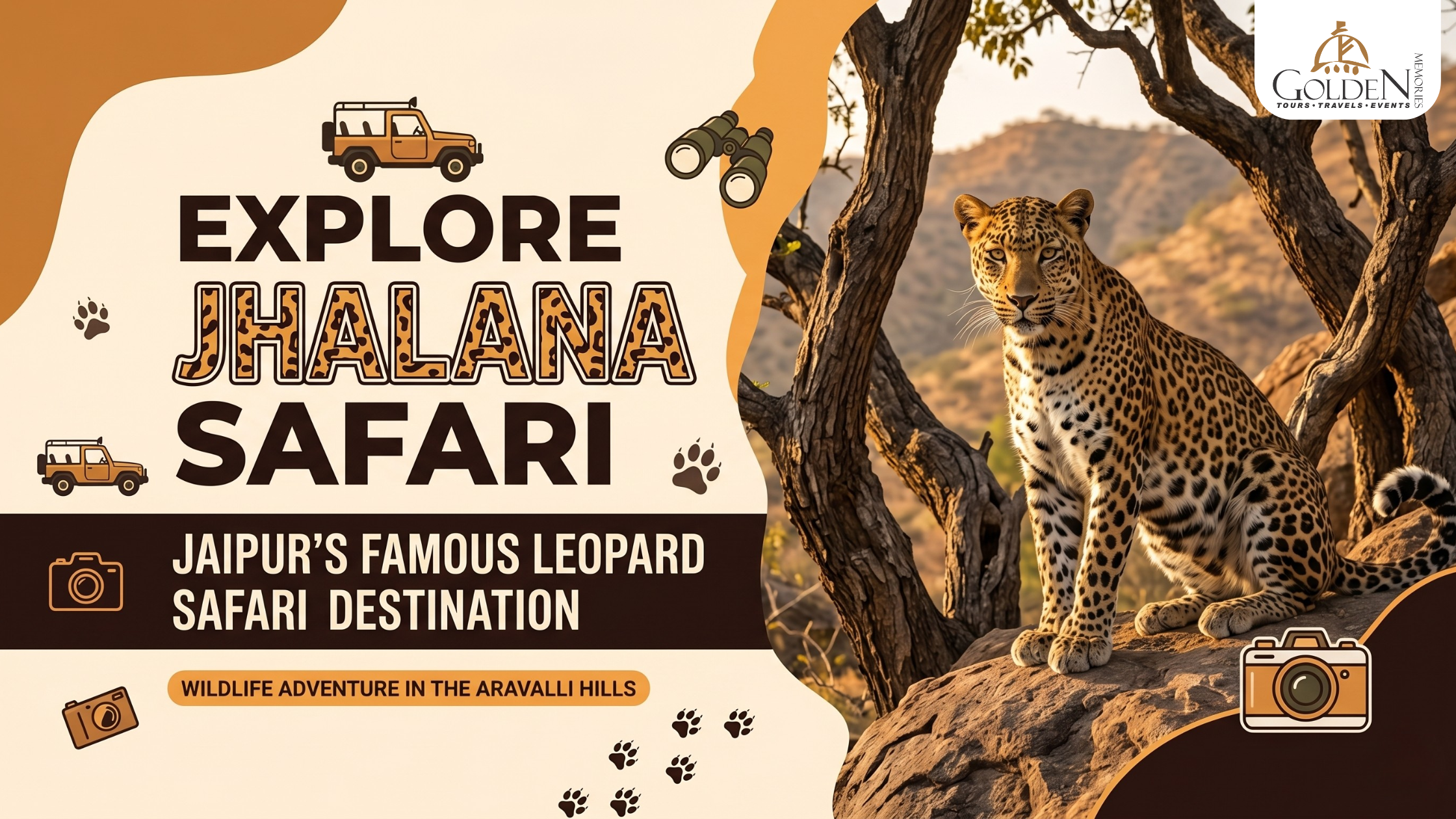
Jhalana Leopard Safari Booking, When you think of Jaipur, your mind inevitably wanders to blushing pink forts, sprawling royal palaces, and vibrant bazaars echoing with centuries of folklore. Yet, mere minutes away from the buzzing streets of Malviya Nagar and the high-end hotels of the city center lies a rugged, untamed secret.
Welcome to Jhalana Leopard Safari, India’s very first dedicated leopard sanctuary. Covering a modest yet biologically dense expanse of roughly 20 square kilometers along the jagged Aravalli hills, Jhalana breaks every traditional rule of wildlife tourism. It isn’t a remote national park requiring an arduous overnight journey; it is a thriving, self-contained wilderness woven directly into the fabric of an expanding metro city.
Moving through 2026, Jhalana has comfortably secured its spot as the global benchmark for urban wildlife management. If you are planning a trip to the Pink City, here is your definitive, masterfully detailed roadmap to navigating this incredible safari destination.
The Ecological Phenomenon: Why Leopards Rule Jhalana
For generations, the thick, thorny scrub forests of Jhalana served as the private hunting grounds (Shikaar) for the Maharajas of Jaipur. As the city modernized and expanded, this forest patch gradually became an island of wilderness surrounded on three sides by urban architecture.
In most Indian forests, leopards play a cautious second-fiddle to larger apex predators like Bengal tigers. However, the absence of tigers in Jhalana triggered a fascinating ecological shift.
- The Top Cat: Leopards became the undisputed kings of this domain. Without the threat of tigers, their behavior shifted from elusive and nocturnal to highly confident and visible.
- Incredible Density: Jhalana boasts an astonishingly high concentration of big cats—housing well over 35 to 40 leopards within its compact borders.
- Unmatched Sighting Rates: Because the area is compact and the cats are unbothered by open-top 4×4 vehicles, Jhalana regularly offers an 80% or higher sighting success rate, outperforming nearly every major tiger reserve in the country for big cat encounters.
Jhalana Safari Timings & Seasonal Shifts (2026 Calendar)
The Rajasthan Forest Department closely regulates entries into Jhalana with strict daily operational shifts. These shifts alter dynamically throughout the year to align perfectly with seasonal variations in sunrise and sunset:
| Operating Months | Morning Shift | Evening Shift |
| Nov 1 – Jan 31 (Winter Peak) | 07:00 AM – 09:30 AM | 03:15 PM – 05:45 PM |
| Feb 1 – Mar 31 (Spring Transition) | 06:15 AM – 08:45 AM | 03:45 PM – 06:15 PM |
| Apr 1 – May 31 (Summer High) | 05:45 AM – 08:15 AM | 04:15 PM – 06:45 PM |
| Jun 1 – Jul 31 (Monsoon Open) | 05:45 AM – 08:15 AM | 04:45 PM – 07:15 PM |
| Aug 1 – Oct 31 (Post-Monsoon) | 06:45 AM – 09:15 AM | 03:45 PM – 06:15 PM |
Important 2026 Innovation – The Night Safari: Jhalana now runs specialized night safari shifts operating between 07:00 PM and 11:00 PM along dedicated perimeter tracks. This offers a rare, spine-tingling window into the active nocturnal hunting behaviors of the reserve’s apex predators.
Comprehensive Cost Baseline & Booking Logistics
To prevent environmental degradation and minimize stress on the wildlife, authorities enforce a strict vehicle cap of roughly 25 to 30 gypsies per shift. Permits can be secured either as a single seat in a shared vehicle or by reserving an entire private 4×4 Maruti Suzuki Gypsy.
Cost Structure (Estimated Baseline for 2026)
- Indian Nationals: Shared Gypsy (Single Seat) | ₹1,250 – ₹1,350
- Indian Nationals: Private Gypsy (Up to 6 Pax) | ₹6,700 – ₹7,000 / vehicle
- Foreign Nationals: Shared Gypsy (Single Seat) | ₹2,100 – ₹2,500
- Foreign Nationals: Private Gypsy (Up to 6 Pax) | ₹12,000 – ₹12,600 / vehicle
Note: Prices include the core forest permit, vehicle entry fee, driver remuneration, and mandatory naturalist guide charges. Private photography operators or luxury concierges may append nominal service fees.
Step-by-Step Online Reservation Process
Booking well in advance (30 to 45 days prior) is critical, particularly for weekend slots or national holiday windows. Follow this exact workflow to secure your permit:
- Access the SSO Rajasthan Portal: Go to the official single sign-on URL (sso.rajasthan.gov.in). Log in with your existing profile or register a new account using your Google ID or Jan Aadhaar card.
- Launch FMDSS application: Locate and click the Forest and Wildlife Department (FMDSS) application shortcut icon inside the main portal dashboard.
- Select Site and Entry Date: Choose “Wildlife Safari” as your booking type. Under the destination drop-down list, select Jhalana Leopard Reserve. Pick your calendar date and choose your preferred shift (Morning, Evening, or Night).
- Input Exact Identification Data: Enter the full legal names, ages, genders, and passport or Aadhaar card numbers for all travelers. Ensure every digit is correct; errors cannot be edited later.
- Process Payment and Print Permit: Complete the payment using a net banking account, credit card, or UPI. Download and print the generated PDF boarding pass. You must bring this physical printout and your original ID card to the entry gate.
Masterclass: Tracking Techniques and Jungle Rules
A safari at Jhalana is far more than a scenic drive; it is an active exercise in wilderness tracking. Your driver and naturalist rely on sensory inputs rather than visual scanning alone to locate leopards:
- The Alarm Call Network: Leopards are master ambushers. When they move, the entire forest sounds the alarm. Listen for the sharp, repetitive “cough” of a Langur monkey hanging from an Anogeissus tree, or the panicked, metallic bell-like “dhonk” of a spotted deer.
- Pugmark Mapping: Sandy paths running through Jhalana act as a daily blackboard. Fresh tracks with sharp, un-collapsed edges tell trackers exactly how recently a cat has patrolled a trail.
- The “Shikaar Audi” Hub: The reserve houses an old royal three-story hunting lodge (Shikaar Audi) featuring an adjacent water hole. Leopards frequently slink out of the heavy scrub during midday heat to drink here, providing magnificent clear-shot framing for zoom lenses.
Beyond the Big Cats: Flora and Fauna Breakdown
While leopards grab the headlines, Jhalana supports an incredibly diverse ecosystem that rewards patient nature lovers.
- Mammalian Neighbors: Striped hyenas (often locked in a bitter turf war with the leopards), desert foxes, golden jackals, jungle cats, blue bulls (Nilgai), and ruddy mongooses.
- Avian Wonderland: Over 100 species of birds call Jhalana home. Look out for the striking Indian Pitta (during monsoons), Spotted Owlets nesting in tree hollows, Eagle Owls, Shikras, and elegant peafowl walking majestically against the dry desert backdrop.
- The Plant Life: The landscape is dominated by dry deciduous scrub, featuring towering Dhok trees (Anogeissus pendula), vibrant Palas (Flame of the Forest) that bursts into brilliant orange blossoms in early spring, and hardy, thorny cacti that thrive on rocky ledges.
FAQs: Navigating Jhalana Like a Pro
1. Is Jhalana open all year round?
Yes. Unlike larger national parks like Ranthambore or Sariska that close entirely for the monsoon season, Jhalana stays open through the rains, offering stunning green backdrops for photography.
2. Which zone is the absolute best for spotting leopards?
Jhalana’s tracks are divided into various interconnected routes (Zones 1, 2, and 3). There is no “perfect” zone; leopards cross paths constantly, and all vehicles have access to standard high-activity tracks.
3. What is the age exemption rule for children?
Children aged 5 and under do not require safari entry fees. Anyone above 5 requires a standard entry permit.
4. Can I bring a heavy DSLR or video camera?
Yes, normal digital cameras are permitted. However, specialized commercial filming equipment or drones require severe, high-tier prior written permissions and steep administrative fees.
5. How long does a standard safari tour last?
A standard morning or evening shift runs for approximately 2 to 2.5 hours from the time of entry to exit.
6. What should I wear for a winter morning safari?
Desert winter mornings (November to January) are shockingly cold. Dress in heavy layers (windcheaters, beanies, and gloves) that you can strip off as the intense sun heats the valley.
7. Are there restroom facilities inside the forest?
No. Once you pass through the main security gate, you are in a protected wild zone. Toilets are strictly limited to the reception area at the gate.
8. Can I hop out of the Gypsy to take a quick selfie?
Absolutely not. Disembarking from your vehicle inside the reserve is a serious criminal offense under the Wildlife Protection Act and can result in heavy fines or immediate expulsion.
9. How far is Jhalana from the main Jaipur airport?
It is remarkably close. The reserve is roughly a 15-to-20-minute drive (approx. 6–8 km) from Jaipur International Airport (JAI).
10. What alternative should I book if Jhalana permits are completely sold out?
Check availability for Amargarh Leopard Reserve or Beed Papad Safari, both of which are located nearby around Jaipur and feature similar terrain and thriving leopard populations.
11. Do I need to tip the driver and the naturalist guide?
Tipping is not mandatory but highly appreciated. If your tracking team works exceptionally hard to decode alarm calls and find wildlife, a tip of ₹300–₹500 is common practice.
12. Is it safe to visit Jhalana with elderly family members?
Yes. The terrain has rocky bits, but the tracks are generally manageable, and the total travel time inside the park is relatively short compared to large national reserves.
13. Are snacks or bottled water allowed inside the vehicle?
You can carry a reusable water bottle. Avoid carrying strong-smelling foods or noisy, crinkly plastic snack wrappers that disrupt the wildlife and cause littering hazards.
14. What are the odds of seeing a striped hyena?
Moderate. Hyenas are predominantly nocturnal, but lucky visitors on late evening or early morning shifts frequently spot them near cave systems or around watering holes.
15. Can I drive my personal car inside the reserve?
No. Only forest-department-authorized, registered 4×4 commercial safari vehicles are legally permitted past the forest checkpost.
Conclusion: The Real Pride of Jaipur
Jhalana Leopard Safari proves that humanity and apex predators can coexist when balanced with respect and strict environmental boundaries. It offers an fast-paced, high-adrenaline counterweight to the historic fort-hopping tours of Rajasthan. Standing on the ancient crest of an Aravalli trail, watching a massive male leopard silhouetted against the distant twinkling lights of Jaipur’s skyline is an unforgettable memory.
Disclaimer & Action Guide
Official park tariffs, vehicle limits, and scheduling policies are subject to periodic structural revisions by the Rajasthan Forest Department. Wildlife sightings are entirely organic and rely on environmental variables; no ethical tour operator can guarantee a big cat spotting on a specific shift.

Comment (0)