
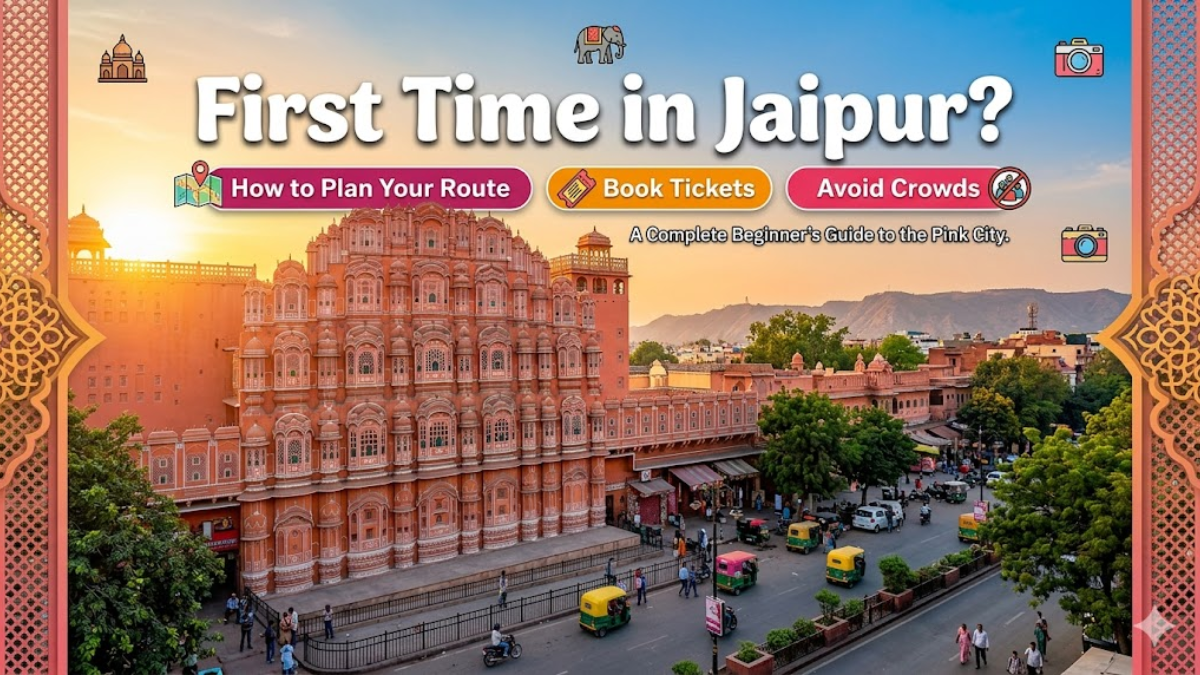
Landing in Jaipur for the very first time can feel like stepping straight into a living museum. The air is thick with history, the streets are flooded with vibrant pink architecture, and towering forts guard the horizon.
However, because Jaipur is one of India’s most popular tourist destinations, its famous palaces can get incredibly crowded. Without a solid plan, you might spend more time waiting in long ticket lines and stuck in traffic than actually enjoying the royalty.
If you are a first-time visitor, this ultimate guide will show you exactly how to map out a seamless route, secure your entry tickets digitally, and strategically bypass the heavy tourist crowds.
How to Map Your Route: The Efficiency Blueprint
Jaipur’s main tourist attractions are broadly split into two geographic areas: the Old City (Pink City grid) and the Amer Suburb (North Area). Trying to mix these up in a single afternoon will leave you exhausted and stuck in heavy traffic.
To save time, segment your sightseeing into two distinct route modules:
[Day 1: The Old City Route] ---> Hawa Mahal ---> City Palace ---> Jantar Mantar ---> Albert Hall
[Day 2: The Amer Fort Route] ---> Jal Mahal ---> Amer Fort  ---> Nahargarh    ---> Jaigarh
Route Module A: The Historic Pink City Core
Best Covered Via: Walking and local E-rickshaws.
The Flow: Start early at Hawa Mahal (The Palace of Winds) for a street-side photo. From there, walk straight to the City Palace complex and the neighboring Jantar Mantar (the royal astronomical observatory). Conclude your afternoon by taking a 10-minute auto ride to the Albert Hall Museum for sunset views.
Route Module B: The Royal Amer Fort Suburb
Best Covered Via: Private app-based cabs or a rented car.
The Flow: Drive north towards Amer. Stop briefly at the lake-palace, Jal Mahal, for a morning lakeside walk. Head straight up to Amer Fort for an extensive exploration. Spend your afternoon traversing the interconnected ridge lines of Jaigarh Fort and wrap up your day at Nahargarh Fort to catch a panoramic sunset over the entire city.
Smart Ticket Booking: Skip the Physical Lines
The absolute biggest mistake first-time travelers make is standing in line at the ticket counter of every monument. During peak tourist seasons, ticket queue wait times at Amer Fort or Hawa Mahal can easily stretch up to 45 minutes.
The Composite Ticket Advantage
If you plan to see multiple monuments, do not buy individual entry passes. Instead, opt for the Rajasthan Government Composite Ticket.
What it covers: Amer Fort, Albert Hall, Hawa Mahal, Jantar Mantar, Nahargarh Fort, and three other minor historic sites.
Validity: It remains valid for 2 consecutive days, giving you complete flexibility.
Price: Approximately ₹400 for Indian Nationals and ₹1,000 for Foreign Tourists.
How to Book Online
Avoid local touts entirely by booking your entry vouchers directly through the official state portal:
Visit the official Rajasthan Tourism / Archaeology Department Website.
Select the “Composite Ticket” or specific monument voucher option.
Enter your details, make a digital payment, and save the QR code on your smartphone.
Simply show the digital QR code at the monument turnstiles for direct, instant entry.
The Insider’s Guide to Avoiding Tourist Crowds
To truly experience the serenity of Jaipur’s architecture without hundreds of people blocking your camera lens, follow these time-tested strategies:
The 8:00 AM Rule: Most major monuments managed by the archaeological department (like Amer Fort and Hawa Mahal) open doors promptly at 8:00 AM. Arriving at 7:50 AM ensures you get to explore the main courtyards completely empty for the first hour.
Visit the Bazaars in the Afternoon: Most tourists throng the famous Johari and Bapu Bazaars in the evening. Flip the script: do your monument hopping early in the morning, and browse the colorful shopping alleys between 1:00 PM and 3:30 PM when the local crowd thins out.
Catch Night Tourism (Jaipur by Night): Did you know that monuments like Albert Hall, Hawa Mahal, and Amer Fort stay beautifully illuminated and open for visitors until 10:00 PM? Visiting after 7:00 PM offers cool evening breezes, zero harsh sunlight, and a fraction of the daytime crowd.
Jaipur Trip Planning Essentials At-A-Glance
| Feature / Metric | Recommendation for First-Timers |
| Ideal Trip Duration | 3 Days / 2 Nights (Perfect to cover all major forts, palaces, and shopping hubs without rushing). |
| Best Conveyance Inside Pink City | E-Rickshaws. They effortlessly maneuver through narrow alleys where cars get stuck. |
| Peak Crowd Hours to Avoid | 11:00 AM to 3:30 PM (This is when large tour buses drop off massive tour groups). |
| Best Season to Visit | October to March (Pleasant, sunny daytime weather perfect for walking tours). |
Frequently Asked Questions (FAQs)
Is the City Palace ticket included in the Government Composite Ticket?
No, the City Palace is still privately managed by the royal family of Jaipur. Its entry passes must be purchased separately at their specific on-site counter or via their dedicated digital portal.
What is the most efficient way to travel from Jaipur Airport to the city center?
The most reliable, hassle-free method is booking a pre-paid or app-based cab (like Ola or Uber) directly from the arrival terminal. It takes roughly 25 to 35 minutes depending on traffic.
Can I easily get English-speaking guides at the palaces?
Yes, every major fort has government-authorized, badge-wearing guides waiting near the entrance. Always verify their official ID card and negotiate the fixed guiding rate before starting your tour. Alternatively, high-quality audio guides are available at Amer Fort and Jantar Mantar.
Conclusion: Master Your First Royal Journey
Your very first trip to Jaipur doesn’t have to be overwhelming. By dividing your geographic routes logically into Old City and Amer segments, utilizing online composite tickets to bypass physical queues, and exploiting the early morning hours, you can experience the absolute best of Rajasthan’s royalty comfortably and efficiently.

Comment (0)