
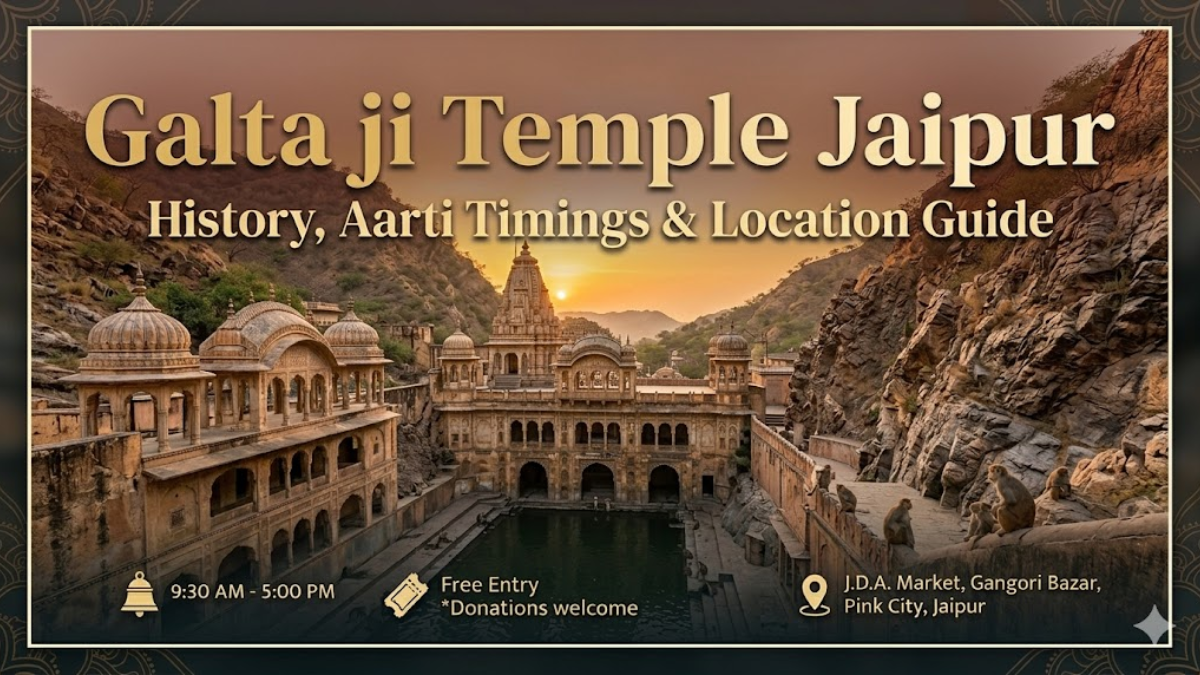
Deeply hidden within a rugged mountain pass of the Aravalli hills lies Galtaji Temple, one of the most mysterious and visually striking spiritual destinations in Rajasthan. Affectionately known to international travelers as the “Monkey Temple,” this ancient Hindu pilgrimage site is built like a luxurious royal mansion (Haveli) rather than a traditional temple, featuring grand pink sandstone pavilions, carved stone archways, and vibrant mythological frescoes.
What makes Galtaji truly magical is its location—it is built into a narrow, dramatic rock gorge that naturally collects fresh mountain spring water, channeling it into seven sacred stone pools (Kunds).
Whether you are exploring the city’s hidden gems on a packed Same Day Jaipur Tour Package or mapping out a complete cultural bucket list with a Jaipur City Tour Package, this uniquely formatted guide is built to help you navigate this sacred valley seamlessly.
Essential Traveler Quick-Check Hub
Before venturing out into the Aravalli valley, lock in these essential trip logistics to ensure a smooth, cost-efficient experience.
Exact Location: Galta Ji, Khaniya-Balaji, Amber Road Highway Outskirts, Jaipur, Rajasthan – 302002.
Opening Hours: 5:00 AM to 9:00 PM Daily (The golden windows are 5:30 AM – 8:00 AM for spiritual mist, and 4:00 PM – 6:30 PM for sunset monkey activity).
Official Entry Fee: Free Entry for all domestic and international tourists. (Note: You may encounter local priests requesting voluntary upkeep donations or a nominal camera maintenance fee of around INR 100-150).
Time Allocation: Plan for 2 to 3 Hours to walk the gorge trail, explore the multi-level shrines, and view the landscape.
Accessibility Constraints: Built directly into a mountain crevice involving dozens of uneven stone steps; it is not wheelchair friendly.
The Sacred History: Out of the Ascetic Wilderness
The spiritual roots of Galtaji reach back long before the foundations of the Pink City were laid. Local religious texts state that the valley was chosen thousands of years ago by the legendary Saint Galav, who spent a century performing intense meditation and penance on these rocks.
Moved by his absolute devotion, the gods blessed the gorge with a permanent, natural mountain spring that flows endlessly from a rock shaped like a cow’s mouth (Gaumukh).
The Royal Structural Foundation
The stone pavilions you see standing today were formally commissioned in the early 18th century (around 1730) by Diwan Rao Kriparam, a prominent administrative official serving in the court of Jaipur’s founder, Maharaja Sawai Jai Singh II.
Historically, it holds massive weight as a national power center for the Ramanandi Holy Sect, an ancient spiritual movement that famously preached spiritual equality across northern India.
Demystifying the Notorious Resident “Monkey Troops”
The temple earned its global reputation due to the massive, permanent population of over 3,000 resident monkeys that live in absolute harmony with the temple structure. The valley houses two distinct species:
The Rhesus Macaques: The smaller, sand-brown, highly energetic monkeys that dominate the main steps and lower swimming pools.
The Gray Langurs: The larger, silver-furred, black-faced monkeys that peacefully occupy the high cliff ledges and surrounding tree canopies.
Critical Wildlife Warning: The monkeys here are highly curious and completely fearless. To prevent getting mobbed, never carry visible snacks, plastic juice bottles, or loose food items out in the open. Keep your cameras close to your body and avoid making direct, aggressive eye contact with the alpha males.
Step-by-Step Structural Highlights Within the Gorge
The temple complex is laid out linearly along the valley floor. As you hike deeper into the mountain pass, you will encounter these core highlights:
1. The Seven Sacred Kunds
The structural heart of the gorge is its terraced water management system. The natural spring water cascades down from the highest mountain pools into the lower reservoirs. The largest and holiest pool is the Galta Kund, which never runs dry—even during the peak heat of summer. Pilgrims travel from all across India to take a ritual dip in these waters, particularly during the winter harvest festival of Makar Sankranti.
2. The Sun Temple (Surya Mandir)
Perched high on the eastern mountain ridge overlooking the entire valley, this unique shrine is dedicated to the Sun God. It requires a steady 15-to-20-minute uphill walk from the lower gates, but the reward is unparalleled—it offers the absolute best panoramic sunset view over the entire walled city of Jaipur.
Seasonal Planning Metrics
| Season | Best Months | Travel Conditions & Vibe |
| Winter (Peak) | October to March | Highly Recommended. Cool breezes make climbing the stone stairs comfortable. Peak festival atmosphere in mid-January. |
| Monsoon | July to September | Scenic & Lush. The surrounding Aravalli hills turn a deep, vibrant green, and the natural waterfalls are full, though paths get slippery. |
| Summer (Avoid) | April to June | Extreme Heat. Temperatures frequently cross 40°C (104°F), making the unshaded stone courtyards incredibly hot to walk on. |
Frequently Asked Questions About Galtaji
Is it safe to feed the monkeys at Galtaji Temple?
Many locals buy bananas or peanuts outside to feed the monkeys. While it is common, it is generally recommended to let the temple staff or experienced guides handle feeding to avoid accidental scratches.
How far is Galtaji Temple from the main city center?
The temple is located roughly 10 kilometers east of Jaipur’s city center. It can be easily reached within 25 to 30 minutes by booking a private taxi or auto-rickshaw.
What is the traditional dress code for entering the valley?
As a highly respected Hindu pilgrimage site, visitors should dress modestly. Avoid sleeveless tops, short dresses, or revealing clothing out of respect for local traditions.
Can you swim or bathe in the holy water tanks?
Yes, devotees are legally permitted to take ritual baths in the designated holy kunds. However, tourists are advised to observe respectfully from the stone steps.
Are there good restaurants or food options directly at the temple site?
No, there are no major commercial cafes or restaurants inside the rugged valley gorge. It is highly recommended to carry your own drinking water bottle and head back into Jaipur for traditional meals.

Comment (0)