
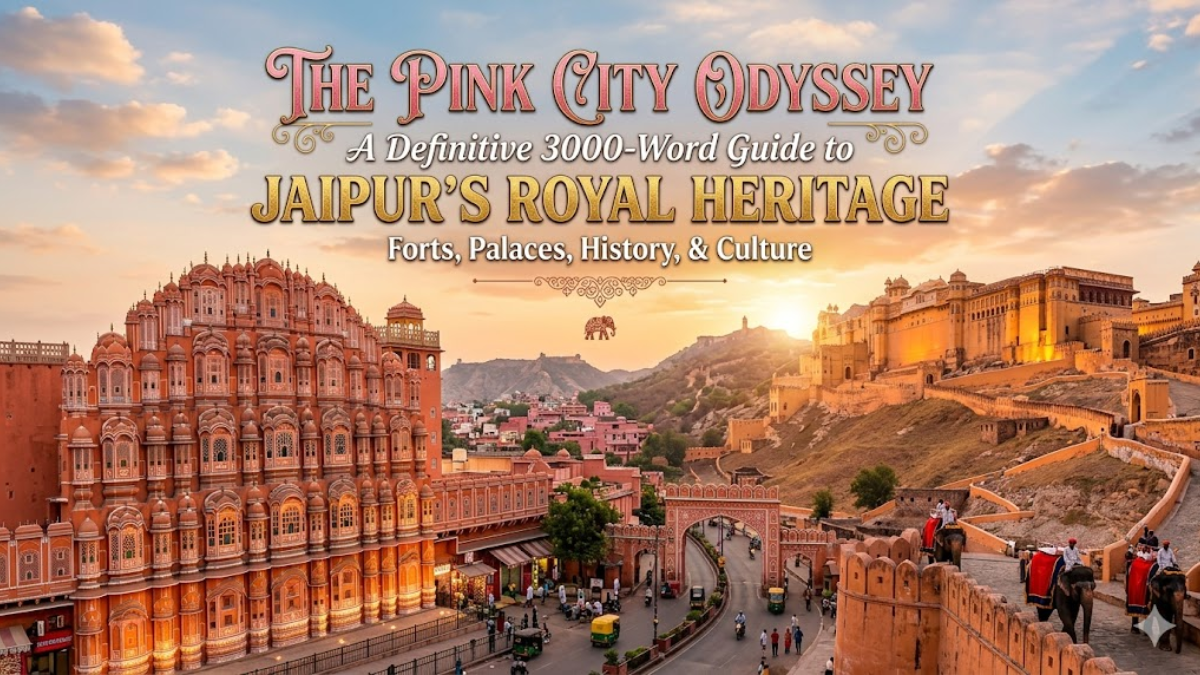
Jaipur, the flamboyant capital of Rajasthan, is a symphony of colors, history, and architectural brilliance. Often referred to as the ‘Pink City’, it stands as a testament to the visionary planning of Maharaja Sawai Jai Singh II. Unlike many ancient cities that grew organically, Jaipur was meticulously planned based on the principles of Shilpa Shastra and Vastu Shastra. Today, it remains a UNESCO World Heritage site that attracts millions of travelers from across the globe.
Whether you are navigating the chaotic yet charming bazaars or standing atop a massive fortification overlooking the Aravalli range, the city offers an experience that is both overwhelming and enchanting. For those who want to experience this grandeur without missing a single detail, choosing a specialized Jaipur city tour package is the best way to immerse yourself in the local culture, heritage, and flavors of this desert jewel.
The Majestic Trio: Amber, Jaigarh, and Nahargarh
Jaipur’s identity is synonymous with its forts. To understand the city, one must explore these three pillars of Rajputana strength.
Amber Fort (Amer): The Crown Jewel Amber Fort is not just a military structure; it is a masterpiece of art. Built with yellow and pink sandstone and white marble, the fort is divided into four main sections, each with its own courtyard.
- The Mirror Palace (Sheesh Mahal): Perhaps the most famous part of the fort. It is said that even a single candle flame can light up the entire hall due to the thousands of tiny convex mirrors embedded in the walls.
- Ganesh Pol: This is the entrance to the private palaces of the Maharajas. It is beautifully painted with natural vegetable dyes that have survived centuries.
- The Magic Flower: A marble carved panel that shows seven different designs (elephant trunk, lotus, cobras, etc.) depending on how you look at it.
Jaigarh Fort: The Victory Fort. Located on a cliff called Cheel ka Teela (Hill of Eagles), Jaigarh was designed to protect Amber Fort. It is home to the Jaivana Cannon, which was the world’s largest cannon on wheels at the time of its manufacture in 1720. The fort also features a complex system of water reservoirs that could store millions of gallons of water.
Nahargarh Fort: The Sunset Point. If you want to see Jaipur breathe, go to Nahargarh at sunset. The fort was originally named Sudarshangarh, but it was renamed after the spirit of a prince named Nahar Singh Bhomia. The Madhavendra Bhawan inside the fort has a unique layout of 12 identical suites for the king’s 12 queens.
The Heart of the City: Hawa Mahal and City Palace
Hawa Mahal: The honeycomb of winds. Built in 1799, this five-story structure is unique because it lacks a proper foundation and is the tallest building in the world without one. The 953 small windows (jharokhas) were designed to allow the royal women to observe daily life and processions in the street below without being seen. The lattice design also creates a “Venturi effect,” cooling the entire building during the scorching summer months.
City Palace: Where Royalty Lives. A portion of the City Palace still serves as the residence of the Jaipur Royal Family.
- Chandra Mahal: The seven-story building where the royal family lives.
- Pritam Niwas Chowk: A small courtyard with four beautifully decorated gates representing the four seasons—Peacock Gate (Autumn), Lotus Gate (Summer), Green Gate (Spring), and Rose Gate (Winter).
- Mubarak Mahal: Originally built for receiving foreign dignitaries, it now houses a museum of royal textiles and weapons.
Scientific Wonders: Jantar Mantar and Albert Hall
Jantar Mantar: The stone observatory. Maharaja Jai Singh II was a passionate astronomer. He built five such observatories in India, but the one in Jaipur is the largest and best-preserved. It features the Samrat Yantra, the world’s largest stone sundial, which can calculate local time with a precision of two seconds.
Albert Hall Museum: An Indo-Saracenic Beauty Located in the Ram Niwas Garden, this museum is the oldest in Rajasthan. Its architecture is a mix of Islamic, Christian, and Hindu styles. Inside, you can find a rich collection of pottery, woodwork, ivory carvings, and even a 2,300-year-old Egyptian mummy named Tutu.
Gastronomy: A Culinary Tour through Jaipur
Rajasthani food is a reflection of its climate—rich, spicy, and long-lasting.
- Dal Baati Churma: The iconic trio of lentils, baked flour balls, and sweet crumbled wheat.
- Pyaaz Kachori: A deep-fried snack filled with spicy onion stuffing. The best ones are at Rawat Mishthan Bhandar.
- Laal Maas: A fiery mutton curry prepared with “Mathania” chilies.
- Ghevar: A honeycomb-shaped dessert made during the monsoon season, particularly during the Teej festival.
Shopping in Jaipur: The Collector’s Paradise
Jaipur is one of the world’s largest hubs for precious and semi-precious stones.
- Johari Bazaar: Famous for jewelry and tie-dye (Bandhani) fabrics.
- Bapu Bazaar: Best for camel leather products like Mojaris (traditional shoes) and bags.
- Kishanpole Bazaar: Known for wooden furniture and textiles.
- Sanganer: Visit the outskirts to see how traditional block printing is done by hand.
Hidden Gems and Offbeat Experiences
- Patrika Gate: The ninth gate of Jaipur, located at Jawahar Circle. It is a photographer’s dream with vibrant murals representing every district of Rajasthan.
- Panna Meena Ka Kund: A 16th-century stepwell near Amber Fort. Its symmetrical stairs are a marvel of ancient engineering.
- Galtaji (The Monkey Temple): A holy site tucked between two cliffs. It features seven natural water springs (kunds) where pilgrims take a dip.
- Elefantastic: An ethical elephant farm where you can wash, feed, and paint (using natural colors) elephants without riding them.
Travel Logistics: Best Time and How to Reach
- October to March: The best time. The weather is cool, and festivals like the Jaipur Literature Festival or Elephant Festival take place.
- April to June: Extremely hot. Temperatures can soar to 48°C.
- July to September: The monsoon brings lush greenery to the Aravallis, but it can be quite humid.
How to Reach:
- By Air: Jaipur International Airport (Sanganer) connects all major Indian and some international cities.
- By Train: Jaipur Junction is a major railway hub.
- By Road: The Delhi-Jaipur highway is excellent, making it a perfect 5-hour drive from the national capital.
Frequently Asked Questions (FAQ)
- Is Jaipur safe for female travelers?
Yes, it is quite safe, but hiring a certified guide is recommended for peace of mind. - What should I wear?
Light cotton clothes are best. Carry a scarf to cover your head when entering temples. - Can I cover Jaipur in 1 day?
You can see the main highlights, but you need at least 3 days to experience its soul truly.

Comment (0)