
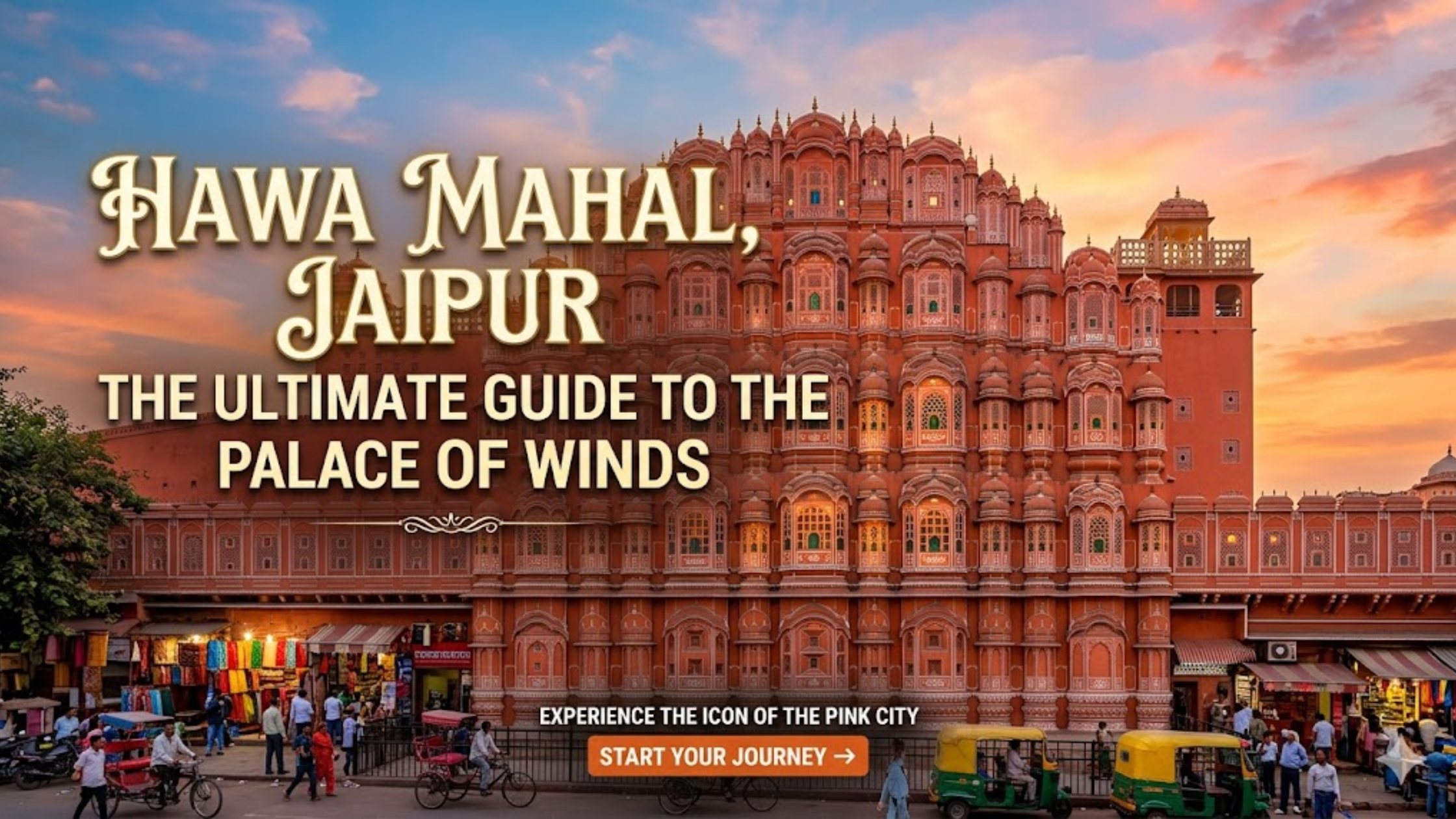
Hawa Mahal, Jaipur: The Ultimate Guide to the Palace of Winds
Jaipur, the vibrant capital of Rajasthan, is a city where every corner whispers tales of royal grandeur. However, if there is one monument that stands as the ultimate symbol of the “Pink City,” it is undoubtedly the Hawa Mahal. Known globally as the “Palace of Winds,” this architectural marvel is a masterpiece of the 18th century. If you are planning a jaipur one day tour package, visiting this iconic structure is an absolute must.
In this extensive guide, we will delve into the history, architecture, and essential travel tips to make your visit to Hawa Mahal unforgettable.
Hawa Mahal at a Glance
Location: Next to City Palace, Badi Chaupar, Jaipur.
Built By: Maharaja Sawai Pratap Singh (1799).
Architect: Lal Chand Ustad.
Design: Inspired by the Crown of Lord Krishna.
Distance: Approximately 6 Kms from Jaipur Junction Railway Station.
The Royal History of Hawa Mahal
The story of Hawa Mahal began in 1799. It was commissioned by Maharaja Sawai Pratap Singh, the grandson of the founder of Jaipur, Maharaja Sawai Jai Singh.
The Inspiration: The Maharaja was deeply inspired by the unique structure of the Khetri Mahal in Jhunjhunu. He envisioned a grander version in his own capital. He hired the renowned architect Lal Chand Ustad to design a palace that would not only look beautiful but also serve a significant social purpose.
A Gateway for Royal Ladies: During that era, the “Purdah” system was strictly followed by the Rajput royal families. The queens and royal ladies were not allowed to appear in public or walk through the busy streets. Hawa Mahal was built as an extension of the Zenana (women’s) chambers. It allowed the royal ladies to observe daily life, street festivals, and royal processions through the windows without being seen by the public.
Architecture: A Blend of Rajput and Mughal Styles
Standing at 50 feet high from its base, Hawa Mahal is a unique five-story pyramid-shaped monument. It is the tallest building in the world without a formal foundation!
1. The 953 Jharokhas & The Venturi Effect
The most striking feature of the palace is its honeycomb facade, adorned with 953 small windows called “Jharokhas.” These windows are decorated with intricate latticework (Jali).
The Science of Cooling: These windows were designed to utilize the “Venturi Effect.” The lattice design forces the air to increase in speed as it passes through the small openings, which naturally cools the breeze before it enters the palace rooms. This kept the interior pleasant even during the scorching Rajasthan summers.
2. Shape and Symbolism
The Divine Crown: Maharaja Sawai Pratap Singh was a devoted follower of Lord Krishna. Consequently, the palace was designed in the shape of Krishna’s crown.
Pink Sandstone: The exterior is built with beautiful red and pink sandstone, perfectly preserving the “Pink City” aesthetic.
3. Ramps Instead of Stairs
An interesting architectural fact about Hawa Mahal is that there are no stairs to reach the upper floors. Instead, the floors are connected by narrow ramps. This was done to ensure that palanquins (Palkis) carrying the royal ladies could be easily pushed up to the higher levels.
Exploring the Five Storeys
Each of the five floors has a specific name and significance:
Sharad Mandir: The first floor where autumn celebrations took place.
Ratan Mandir: The second floor, famous for its dazzling glass and mirror work.
Vichitra Mandir: The third floor, where the Maharaja used to offer his prayers to Lord Krishna.
Prakash Mandir: The fourth floor, characterized by open terraces on both sides.
Hawa Mandir: The topmost floor, from which the palace derives its name.
Planning Your Visit: Practical Information
When booking your jaipur tour package, keep these logistical details in mind:
Timings & Entry Fees
Opening Hours: 9:00 AM to 4:30 PM.
Best Time to Visit: Early morning (Sunrise). As the first rays of the sun hit the pink sandstone, the entire building glows like gold.
Entry Fee (Indian): ₹50 per person.
Entry Fee (Foreigner): ₹200 per person.
How to Reach
By Metro: The Badi Chaupar Metro Station is just a 1-minute walk away.
By Car/Taxi: It is 5 km from the city center via Mirza Ismail (MI) Road.
By Bus: The Badi Chopar Bus Stop is the nearest point for public transport.
Top Attractions Near Hawa Mahal
Since the palace sits at the edge of the City Palace complex, you can easily cover several spots in one go:
City Palace: The magnificent royal residence.
Jantar Mantar: A UNESCO World Heritage astronomical observatory.
Johari Bazaar: The perfect place for authentic Rajasthani jewelry and textiles.
Jal Mahal: The floating palace, located just a short drive away.
Travel Tips for a Great Experience
Wear Comfortable Shoes: You will be walking up several ramps to reach the top; avoid heels.
Stay Hydrated: Carry a water bottle, especially if you are visiting between April and July.
The Perfect Photo: For the best view of the facade, head to the rooftop cafes directly across the street (like Wind View Cafe or Tattoo Cafe).
Visit the Museum: Don’t miss the small museum within the premises that houses Rajput weapons, swords, and miniature paintings.
Guided Tours: Hiring a local guide is recommended to understand the hidden stories behind each window.
Where to Eat Nearby
Laxmi Mishthan Bhandar (LMB): Famous for its Rajasthani Thali and Pavitra Paneer Ghewar.
Wind View Cafe: Offers a panoramic view of the Hawa Mahal while you enjoy a cup of Masala Chai.
Frequently Asked Questions (FAQ)
Q1. Who built Hawa Mahal?
It was built by Maharaja Sawai Pratap Singh in 1799.
Q2. How many windows are in Hawa Mahal?
The palace features 953 intricately carved windows or “Jharokhas.”
Q3. Is there an entrance fee?
Yes, it is approximately ₹50 for Indians and ₹200 for foreign tourists.
Q4. Can you see the whole city from Hawa Mahal?
Yes, the top floors offer a breathtaking panoramic view of the Jaipur city skyline, including the Jantar Mantar and City Palace.
Conclusion
Hawa Mahal is more than just a beautiful facade; it is a testament to the scientific brilliance and cultural richness of the Rajput era. Whether you are a history buff, an architecture lover, or a photography enthusiast, this monument will leave you spellbound. Book your Jaipur sightseeing tour today and experience the magic of the Palace of Winds for yourself!

Comment (0)