
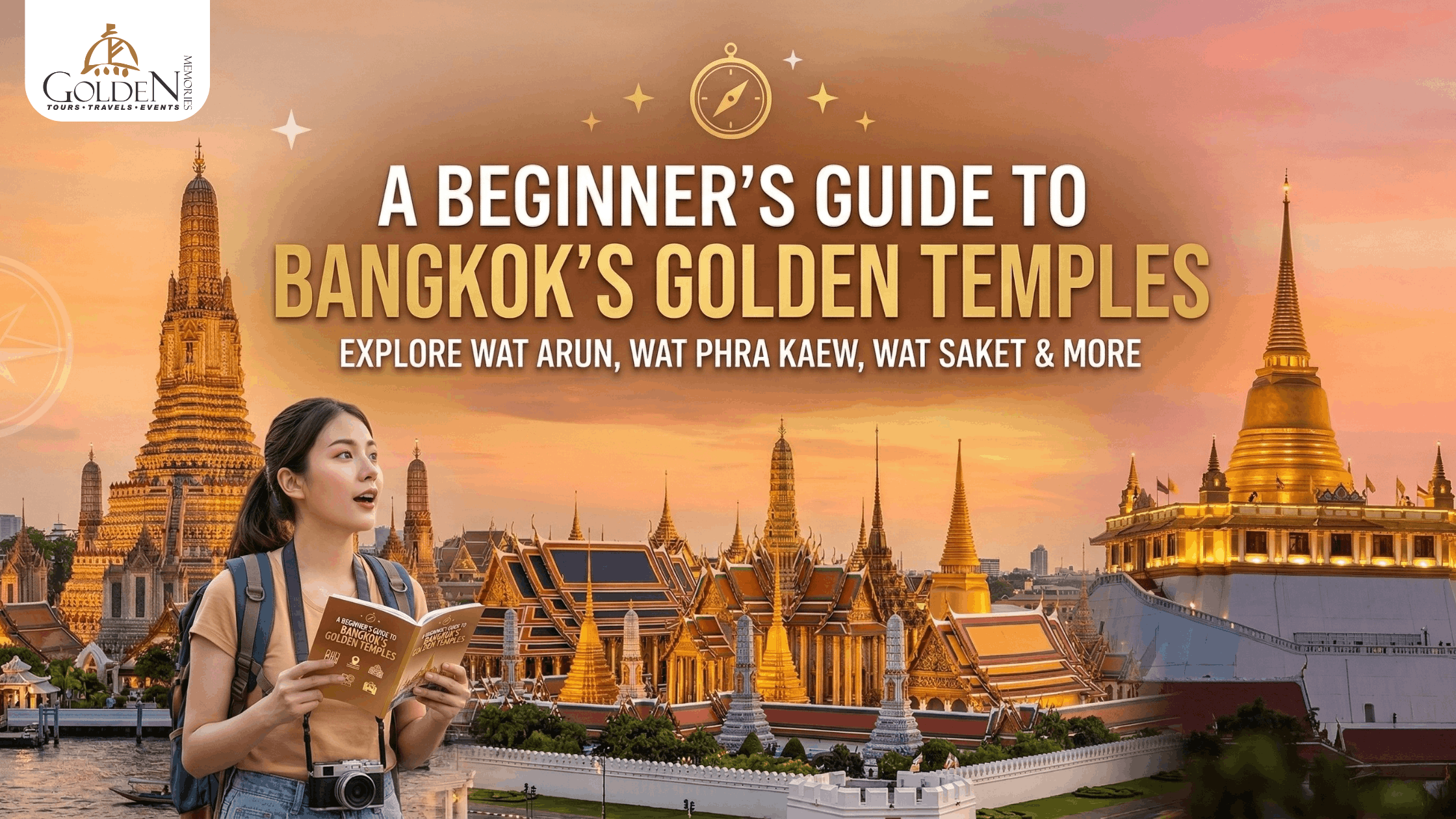
Thailand Tour Package, For many travelers, the first glimpse of Bangkok isn’t the neon lights of Sukhumvit or the bustling stalls of a night market—it is the silhouette of a golden spire piercing the tropical sky. Bangkok, the “City of Angels,” is home to over 400 Buddhist temples (Wats), each a masterpiece of porcelain mosaics, shimmering gold leaf, and deep-rooted spirituality.
If you are transitioning from the rugged forts of Rajasthan to the delicate beauty of Southeast Asia, you’ll find that a Thailand tour package offers a cultural depth that rivals even the Heritage Pinkcity Tour of Forts & Palaces. This guide is designed for the first-time visitor, walking you through the “Big Three” temples and the essential etiquette to ensure your spiritual journey is as smooth as a Jaipur private full-day sightseeing tour.
The Crown Jewel: Wat Phra Kaew & The Grand Palace
Your exploration of Bangkok’s spiritual heart must begin at the Grand Palace complex. Built in 1782, this was the official residence of the Kings of Siam for over 150 years. Within its white-walled compound lies Wat Phra Kaew, the Temple of the Emerald Buddha.
- The Emerald Buddha: Despite its name, this highly revered 66-cm statue is actually carved from a single block of translucent green jade. It sits high on a golden altar, and its golden robes are changed three times a year by the King of Thailand to mark the seasons.
- The Ramakien Murals: Don’t miss the 2-km long gallery featuring 178 panels of hand-painted murals depicting the Thai version of the Ramayana. For those who enjoy the history of a jaipur city tour package, these murals offer a fascinating parallel to Indian epics.
- Architecture: Expect a dizzying array of gilded stupas, orange-and-green tiled roofs, and fierce “Yaksha” (guardian giants) standing at the gates.
Note: The Grand Palace has the strictest dress code in Thailand. Ensure your shoulders and ankles are fully covered—scarves over tank tops are often rejected here.
The Giant of Serenity: Wat Pho (Temple of the Reclining Buddha)
Located just a short walk from the Grand Palace, Wat Pho is often the favorite of seasoned travelers. It feels more relaxed, with more shade and a calmer pace than its royal neighbor.
- The Reclining Buddha: This massive 46-meter-long statue is covered entirely in gold leaf. Its feet alone are 5 meters long and inlaid with mother-of-pearl depicting 108 auspicious symbols.
- Center of Learning: Long before modern universities, Wat Pho was Thailand’s first public university. It remains the headquarters for traditional Thai medicine and massage.
- The 108 Bowls: You will hear a rhythmic “clink-clink-clink” as you walk. This comes from visitors dropping 108 coins into bronze bowls for good luck and to support the temple’s upkeep.
The Riverside Icon: Wat Arun (Temple of Dawn)
Across the Chao Phraya River stands the most iconic silhouette in Bangkok: Wat Arun. While its name suggests the morning, it is perhaps most beautiful at sunset when it is illuminated against the darkening sky.
- Porcelain Mosaic: Unlike the gold-heavy temples in the city center, Wat Arun is encrusted with millions of pieces of colorful Chinese porcelain and seashells.
- The Khmer-style Prang: The central spire towers over 70 meters high. While the stairs are steep, the view of the river and the Grand Palace from the balcony is worth every step.
- Access: Reaching Wat Arun is an adventure in itself. Take a 5-THB cross-river ferry from the Tha Tien pier (near Wat Pho) for a quick and scenic ride.
The Hidden Gem: Wat Saket (The Golden Mount)
If you want a panoramic view of the city similar to the view from Nahargarh Fort during a jaipur local sightseeing package, head to Wat Saket.
- The Climb: You must ascend approximately 320 steps on a winding path. The walk is peaceful, shaded by misting fans, and lined with bells that you can ring for good merit.
- The Summit: At the top sits a gleaming golden chedi housing a relic of the Buddha. The 360-degree view of old Bangkok is unparalleled.
Temple Etiquette: The “Do’s and Don’ts”
Temples are active places of worship, not just museums. Following these simple rules will ensure you are a respectful guest:
- Dress Modestly: This is the most important rule. Cover your shoulders and knees. Men should wear long trousers; women should wear long skirts or loose-fitting pants.
- Remove Your Shoes: Always take off your shoes before entering the Ubosot (ordination hall). Wear easy-to-slip-on shoes as you will be doing this often.
- Watch Your Feet: Never point your feet toward a Buddha image or a monk. When sitting, tuck your feet behind or to the side.
- Be Silent: Maintain a quiet tone. Avoid public displays of affection, which are considered disrespectful in sacred spaces.
- Photography: Photography is allowed in most temple grounds but strictly prohibited inside certain halls (like the Emerald Buddha’s chamber). Always check for signs.
✨ Experience the Divine with The Golden Memories
Planning a trip to Thailand can feel overwhelming, but at The Golden Memories, we bring our years of expertise in the jaipur tour package industry to the international stage. We ensure that your cultural exploration is comfortable, safe, and deeply meaningful.
- ✅ Expert Hindi/English Guides: Our guides help bridge the cultural gap, explaining the links between Indian and Thai mythology within the temple walls.
- ✅ Seamless Transfers: Move between your 4-star hotel and the riverside piers in private AC comfort, similar to a jaipur one day tour package by car.
- ✅ All-Inclusive Logistics: We handle the entry fees (approx. 500 THB for the Grand Palace) and timings so you don’t have to wait in the sweltering mid-day heat.
👉 Explore Our Exclusive Thailand Tour Packages Today!
Frequently Asked Questions (FAQs)
1. Is there an entry fee for Bangkok temples?
Yes. Major ones like the Grand Palace (500 THB), Wat Pho (300 THB), and Wat Arun (200 THB) charge fees, while smaller neighborhood temples are often free or charge a nominal 20-50 THB.
2. Can I wear a scarf to cover my shoulders?
In most temples, yes. However, the Grand Palace often requires a proper sleeved shirt. We recommend wearing a light cotton t-shirt.
3. What are the opening hours?
Most temples open around 8:00 AM and close by 5:00 PM or 6:00 PM. The Grand Palace stops selling tickets at 3:30 PM.
4. How long does it take to see the “Big Three”?
If you start early (8:30 AM), you can comfortably see the Grand Palace, Wat Pho, and Wat Arun by 1:00 PM.
5. Is the Thailand tour package suitable for families?
Absolutely. It is a fantastic jaipur tour package for family alternative that combines history with fun activities like river boats.
6. Can I take photos inside the temples?
In the courtyards, yes. Inside the main halls where the Buddha resides, it is usually forbidden. Look for the “No Photo” signs.
7. What is the “Golden Mount”?
It is Wat Saket, a temple on an artificial hill offering the best sunset views of the old city.
8. Can women touch monks?
No. Women should never touch a monk or hand something directly to them. Use a tray or a male intermediary.
9. Are there many steps at Wat Arun?
Yes, the central prang has very steep steps. Take your time, or enjoy the view from the lower terraces.
10. Is it better to take a Tuk-Tuk or a Taxi?
For short hops between temples, a Tuk-Tuk is fun, but for longer distances, an AC taxi or a Jaipur Private Full-Day Sightseeing Tour style car is better for the heat.
11. Do I need to take off my hat?
Yes, remove hats and sunglasses before entering any indoor temple sanctuary.
12. What is the best way to cross the river?
Use the cross-river ferries at Tha Tien pier. They cost only 5 THB and take 3 minutes.
13. Is there a “best day” to visit?
Weekdays are generally less crowded than weekends and public holidays.
14. Can I visit the temples as part of a jaipur package for 3 days?
We offer extended itineraries where you can do a 3-day Rajasthan tour followed by a 5-day Thailand trip.
15. Is Indian food available near the temples?
Yes, the Phahurat area (Little India) is nearby and offers excellent North and South Indian meals.
16. Why is the Emerald Buddha so famous?
It is considered the protector of the Thai nation and the most sacred object in the country.
17. Can I get a massage at Wat Pho?
Yes, it is the birthplace of Thai massage. You can get a traditional therapeutic massage on-site.
18. Is a guide necessary?
While not mandatory, a guide from The Golden Memories will explain the architecture and prevent you from falling for common “Palace is Closed” scams.
19. What is the “Reclining Buddha” representing?
It depicts the Buddha in his final illness, about to enter Parinirvana (final death/enlightenment).
20. How do I book?
Visit our website or contact our Jaipur office to customize your Thailand itinerary!
Conclusion
The golden temples of Bangkok are more than just photo opportunities; they are the living, breathing heart of Thai culture. Standing before the Emerald Buddha or climbing the steps of the Golden Mount offers a sense of peace that stays with you long after the trip ends. With The Golden Memories, your transition from the “Land of Kings” to the “Land of Smiles” is handled with the royalty and care you deserve.
Disclaimer:
The Golden Memories acts as a travel facilitator. Temple entry fees and opening hours are subject to change by the Thai Government and the Bureau of the Royal Household. We recommend all visitors respect local laws regarding the monarchy and religion during their visit.
Ready to Witness the Golden Spires?
Your spiritual journey to the East begins with a single step. Book Your Thailand Tour Package with The Golden Memories Today!

Comment (0)